Deep Dive: Analyzing the Environmental Impact of AI Data Center Water Consumption
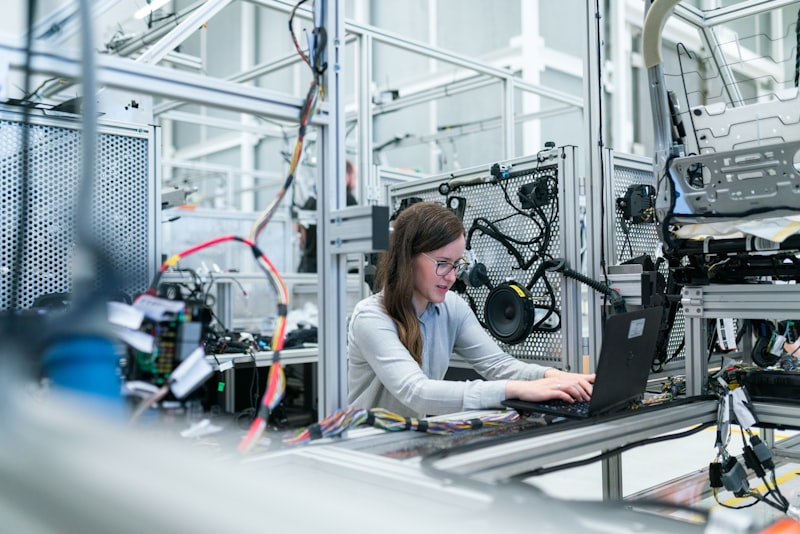
An in-depth investigation into how hyperscale AI data centers consume water for evaporative cooling and how operators are deploying liquid immersion technologies to mitigate local resource strain.
As AI model training workloads expand exponentially, liquid cooling infrastructure has become a central environmental concern. While traditional evaporative cooling towers consume millions of gallons of potable water daily, geography and regional climate play massive roles in total efficiency.
What happened
Read the source's account next to the product docs, not instead of them. Names and figures in the lede are the ones we can stand behind; everything else below is how teams usually absorb a story like this. If a number, ship date, or quote is not in the source excerpt, it is not in this briefing. That is deliberate — day-one coverage is where invented specifics do the most damage.
An in-depth investigation into how hyperscale AI data centers consume water for evaporative cooling and how operators are deploying liquid immersion technologies to mitigate local resource strain. As AI model training workloads expand exponentially, liquid cooling infrastructure has become a central environmental concern.
How it works
Under the hood this is a systems change, not a press-release adjective. Ask what surface area moved — API, policy, hardware, model behavior, or go-to-market — and which of those you actually ship against. A useful working question: if you had to draw the before/after on a whiteboard, which box would you erase? That is the mechanism. Everything else is packaging.
While traditional evaporative cooling towers consume millions of gallons of potable water daily, geography and regional climate play massive roles in total efficiency.
Why it matters
If you build on or compete with the parties named in Deep Dive: Analyzing the Environmental Impact of AI Data Center Water Consumption, the practical hit is on roadmap sequencing and risk reviews this quarter, not on a vague 'future of the industry'. Put one owner on the story, give them a day to read the primary material, and decide whether this is a this-sprint item, a this-quarter item, or noise.
Cross-check this section against the source and the official docs before you brief stakeholders on Deep Dive: Analyzing the Environmental Impact of AI Data Center Water Consumption.
Who is affected
Incumbents, customers, and adjacent open-source projects do not feel this equally. Map the change to your own stack: what you operate, what you buy, and what you will have to explain to a security, legal, or finance review. Partners and resellers often feel it before the end user does — check those contracts before you assume nothing moved.
Cross-check this section against the source and the official docs before you brief stakeholders on Deep Dive: Analyzing the Environmental Impact of AI Data Center Water Consumption.
What to watch next
Treat the next two weeks as a verification window. Watch the vendor's own changelog, any regulator or standards follow-up, and whether a competitor ships a matching capability. Do not change production on day-one coverage alone. If nothing new is published in that window, the story was smaller than the headline.
Cross-check this section against the source and the official docs before you brief stakeholders on Deep Dive: Analyzing the Environmental Impact of AI Data Center Water Consumption.
A 3–5 minute news post is a briefing, not a runbook. Keep the source and the vendor's primary page in another tab, quote only what they printed, and write down the single decision this story forces (upgrade, wait, or ignore) before you Slack it to the rest of the team. If you need more than that decision, you want the primary docs or a later engineering deep-dive — not another recap of Deep Dive: Analyzing the Environmental Impact of AI Data Center Water Consumption.
When you brief someone else on Deep Dive: Analyzing the Environmental Impact of AI Data Center Water Consumption, lead with the surface that moved and the decision you need from them. Do not paste the whole thread. If you cannot name the surface — API, policy, model, hardware, or commercial terms — you are not ready to brief. Go back to the source and the vendor page until you can. That extra ten minutes is cheaper than a wrong upgrade or a missed exposure.
Subscribe to Tech Bytes Briefing
Get hand-curated technology analysis, major breakings, and executive summaries delivered straight to your inbox daily.
Tech Pulse Daily
Get tomorrow's pulse first
Join engineers who read Tech Pulse before stand-up. Free, weekday mornings.
Data center operators are increasingly transitioning to direct-to-chip liquid cooling and dielectric fluid immersion, dramatically lowering water consumption while recycling waste heat for district warming.

Author
Dillip Chowdary
Writes Tech Bytes coverage of AI, engineering, and the tools that actually ship. Editor of Tech Pulse Daily.
Related on Tech Bytes
OpenAI to start showing ads on ChatGPT’s free and Go tiers in India
Read →
Deep-Dive: Modernizing Legacy Supersonic Aircraft with Glass Cockpit Avionics
Read →
Rockstar Releases Grand Theft Auto VI Extended Look Preview on YouTube and Netflix
Read →
Microsoft Rebrands 365 Roadmap to 'AI at Work' and Issues Windows 11 Stuttering Fix
Read →
Free Tools
- ✉️ Vintage Letter Generator
Free handwritten-style vintage letter maker — love notes, parchment, download
- 🎨 Past Forward
AI vintage photo editor — travel a portrait through decades
- ✈️ CareerPilot
AI job-search copilot: live job matching, fit scores & resume optimization
- ⚡ Code Formatter
Clean and format any code snippet instantly
- 🔒 Data Masking Tool
Mask sensitive data in logs and test fixtures
- 🖼️ Base64 Decoder
Decode and preview base64 image strings