Anthropic Introduces Open Hardware Standard for Physical AI Agent Control
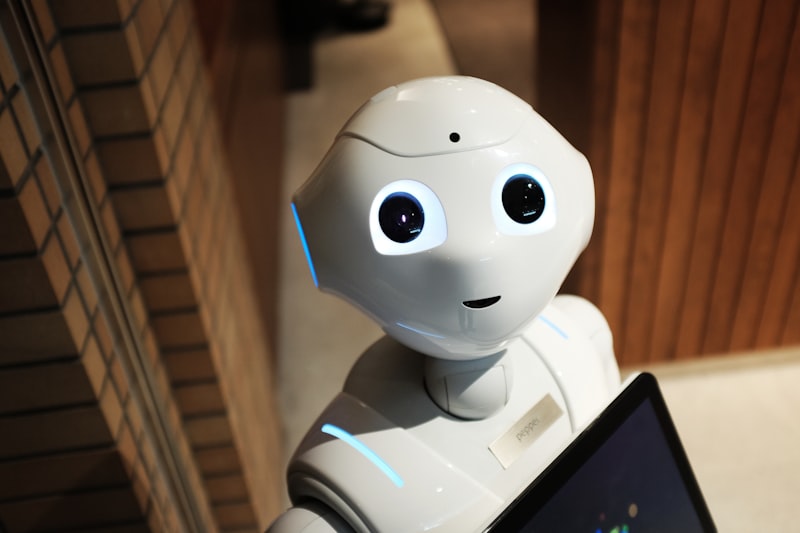
Anthropic has released an open hardware standard designed to standardize how autonomous AI agents interface with physical devices, robotics, and industrial control systems.
Anthropic has unveiled its Open Physical Agent Standard (OPAS), a protocol designed to standardize device-agent communication. The framework enables AI software models like Claude to safely trigger actuators, sensors, and micro-controllers across heterogeneous hardware environments.
The announcement
A versioned cut is a contract with anyone who pinned the last one. Anthropic Introduces Open Hardware Standard for Physical AI Agent Control should be read as a changelog first and a launch second. If you cannot find the changelog, you do not have enough to upgrade.
Anthropic has released an open hardware standard designed to standardize how autonomous AI agents interface with physical devices, robotics, and industrial control systems. Anthropic has unveiled its Open Physical Agent Standard (OPAS), a protocol designed to standardize device-agent communication.
What actually changed
Builders should diff the release notes for APIs, defaults, and removed flags. That list is the migration. Anything not on it is a rumor until it shows up in a follow-up patch.
The framework enables AI software models like Claude to safely trigger actuators, sensors, and micro-controllers across heterogeneous hardware environments.
Who should care
Install via the vendor's documented channel. Snapshot config, roll through staging, keep a one-command rollback. Time-box the canary. If the release has no documented rollback, that is the first risk you escalate.
Cross-check this section against the source and the official docs before you brief stakeholders on Anthropic Introduces Open Hardware Standard for Physical AI Agent Control.
Availability and how to try it
Gotchas hide in transitive deps, license files, and anything that touches auth or storage. Read those sections twice. Then grep your own repo for the old flag names so you are not surprised in prod.
Cross-check this section against the source and the official docs before you brief stakeholders on Anthropic Introduces Open Hardware Standard for Physical AI Agent Control.
What to watch next
Watch the first patch release. If it arrives inside a week, the original cut was not as boring as the announcement implied. Pin to the patch, not the day-zero tag, unless you have a reason.
Cross-check this section against the source and the official docs before you brief stakeholders on Anthropic Introduces Open Hardware Standard for Physical AI Agent Control.
A 3–5 minute news post is a briefing, not a runbook. Keep the source and the vendor's primary page in another tab, quote only what they printed, and write down the single decision this story forces (upgrade, wait, or ignore) before you Slack it to the rest of the team. If you need more than that decision, you want the primary docs or a later engineering deep-dive — not another recap of Anthropic Introduces Open Hardware Standard for Physical AI Agent Control.
When you brief someone else on Anthropic Introduces Open Hardware Standard for Physical AI Agent Control, lead with the surface that moved and the decision you need from them. Do not paste the whole thread. If you cannot name the surface — API, policy, model, hardware, or commercial terms — you are not ready to brief. Go back to the source and the vendor page until you can. That extra ten minutes is cheaper than a wrong upgrade or a missed exposure.
Treat day-one coverage of Anthropic Introduces Open Hardware Standard for Physical AI Agent Control as a pointer, not a specification. the source is useful for names, dates, and the claim as stated; it is not a substitute for the changelog, the advisory, or the contract clause that actually binds you. If those artifacts are not public yet, wait. Acting on a paraphrase is how teams ship the wrong flag or miss the one dependency that was actually in scope.
If Anthropic Introduces Open Hardware Standard for Physical AI Agent Control touches something you operate, open a ticket with the primary link, the owner, and the verification step — not a Slack emoji reaction. If it does not touch you, write that down too so the next person does not re-open the question. Either way, the artifact is the point. Recaps of recaps of the source do not help the on-call.
Subscribe to Tech Bytes Briefing
Get hand-curated technology analysis, major breakings, and executive summaries delivered straight to your inbox daily.
Tech Pulse Daily
Get tomorrow's pulse first
Join engineers who read Tech Pulse before stand-up. Free, weekday mornings.
By establishing strict security handshake rules and deterministic safety fallback bounds, OPAS seeks to prevent rogue command execution in physical environments while accelerating autonomous robotics adoption.

Author
Dillip Chowdary
Writes Tech Bytes coverage of AI, engineering, and the tools that actually ship. Editor of Tech Pulse Daily.
Related on Tech Bytes
OpenAI to start showing ads on ChatGPT’s free and Go tiers in India
Read →
Deep-Dive: Modernizing Legacy Supersonic Aircraft with Glass Cockpit Avionics
Read →
Rockstar Releases Grand Theft Auto VI Extended Look Preview on YouTube and Netflix
Read →
Microsoft Rebrands 365 Roadmap to 'AI at Work' and Issues Windows 11 Stuttering Fix
Read →
Free Tools
- ✉️ Vintage Letter Generator
Free handwritten-style vintage letter maker — love notes, parchment, download
- 🎨 Past Forward
AI vintage photo editor — travel a portrait through decades
- ✈️ CareerPilot
AI job-search copilot: live job matching, fit scores & resume optimization
- ⚡ Code Formatter
Clean and format any code snippet instantly
- 🔒 Data Masking Tool
Mask sensitive data in logs and test fixtures
- 🖼️ Base64 Decoder
Decode and preview base64 image strings