Deep Dive: How Autonomous Highway Trucking Will Transform West Coast Freight Logistics
Our deep-dive examination explores the sensor architectures, teleoperation safety networks, and economic disruptions of California's newly authorized autonomous highway freight corridors.
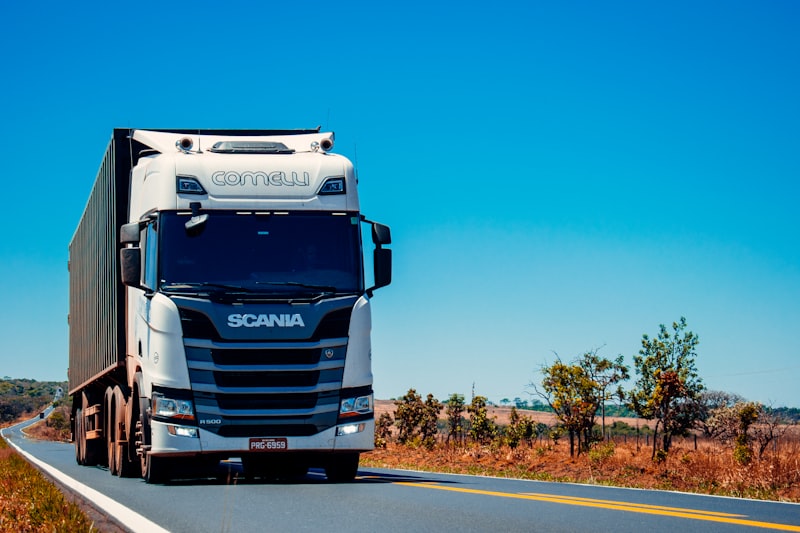
California's regulatory green light for autonomous Class 8 trucks marks a watershed moment in freight transportation history. Transporting 80,000-pound semi-trucks at 65 mph on public highways requires an order of magnitude higher sensor reliability and compute performance than urban robotaxi operations.
To operate safely in high-speed highway environments, autonomous trucks deploy multi-modal sensor arrays combining long-range FMCW LiDAR (capable of detecting objects 1,000 meters ahead), thermal cameras for night visibility, and high-definition radar arrays unaffected by fog or heavy rain.
Teleoperation Safety Net and Fail-Operational Steering
Unlike early autonomous prototypes, modern production autonomous trucks incorporate fail-operational hardware redundancies across every critical system: dual electric steering actuators, redundant pneumatic brake lines, and dual compute nodes running parallel perception models.
If an unexpected road hazard or sensor obstruction occurs, the onboard vehicle guidance system can execute a controlled emergency pullover onto the highway shoulder without requiring human intervention.
Get Tech Pulse Daily in Your Inbox
Join 45,000+ engineers, founders, and tech leaders receiving high-signal daily breakdowns directly from major publishers.
Zero spam. Unsubscribe anytime in one click.
Fuel Efficiency and Freight Cost Reduction
Beyond safety, autonomous trucking offers dramatic environmental and economic benefits. Computer-controlled acceleration and platooning algorithms reduce aerodynamic drag and smooth out speed fluctuations, yielding a 10% to 15% reduction in diesel consumption and carbon emissions compared to human-driven fleets.
As commercial deployment expands across West Coast freight hubs, consumers can expect faster shipping times and lower freight surcharges on retail goods nationwide.