Can AI data centers be mass-produced like cars? This startup aims to find
Runware is scaling a factory in Romania to build modular data center pods on an assembly line, targeting 30 megawatts of daily compute capacity by 2028.
By Dillip Chowdary • Oct 31, 2026 • Source: TechCrunch
AI infrastructure startup Runware is expanding its modular hardware footprint by establishing an assembly-line factory model designed to produce prefabricated data centers like automobiles. According to details reported in TechCrunch's report, the company plans to scale production at its Romanian facility to 30 megawatts per day by 2028, or nearly 1 gigawatt monthly. The initiative packages pre-assembled Sonic Inference Pods to bring operational compute clusters online at customer locations within 48 hours of delivery.
This report examines Runware's assembly-line infrastructure, closed-loop cooling systems, power contracts, and commercial delivery terms. It is written for technology executives, infrastructure engineers, and enterprise data center operators evaluating prefabricated compute pods against conventional multi-year facility builds. Readers will find verified figures on factory production targets, site deployment intervals, power pipeline capacities, hardware adaptations, and unit economics, analyzing how standardized assembly line output contrasts with traditional multi-year real estate and construction models across the broader artificial intelligence sector.
AI data centers be mass-produced like cars?: what actually changed
Runware transitioned its hardware deployment model from custom installations to continuous automotive-style manufacturing. The company operated an initial facility for several years to produce its Sonic Inference Pods, and broke ground earlier this year on a second specialized factory in Romania. That second plant will complete construction within months and go fully online early next year. While assembling a pod previously required three weeks, the reorganized production line will compress build times to a single day as manufacturing reaches full capacity.
The broader shift involves ambitious industrial output targets established by co-founder and chief executive officer Flaviu Radulescu. Runware intends to scale production to 30 megawatts daily by 2028, representing nearly 1 gigawatt of modular capacity every month. That annual volume roughly equals the 10 gigawatts of total data center power the entire United States was expected to add this year. Market interest has responded swiftly, generating 1 billion dollars in committed customer interest covering over 20 megawatts within one month of launch.
AI data centers be mass-produced like cars?: how it works
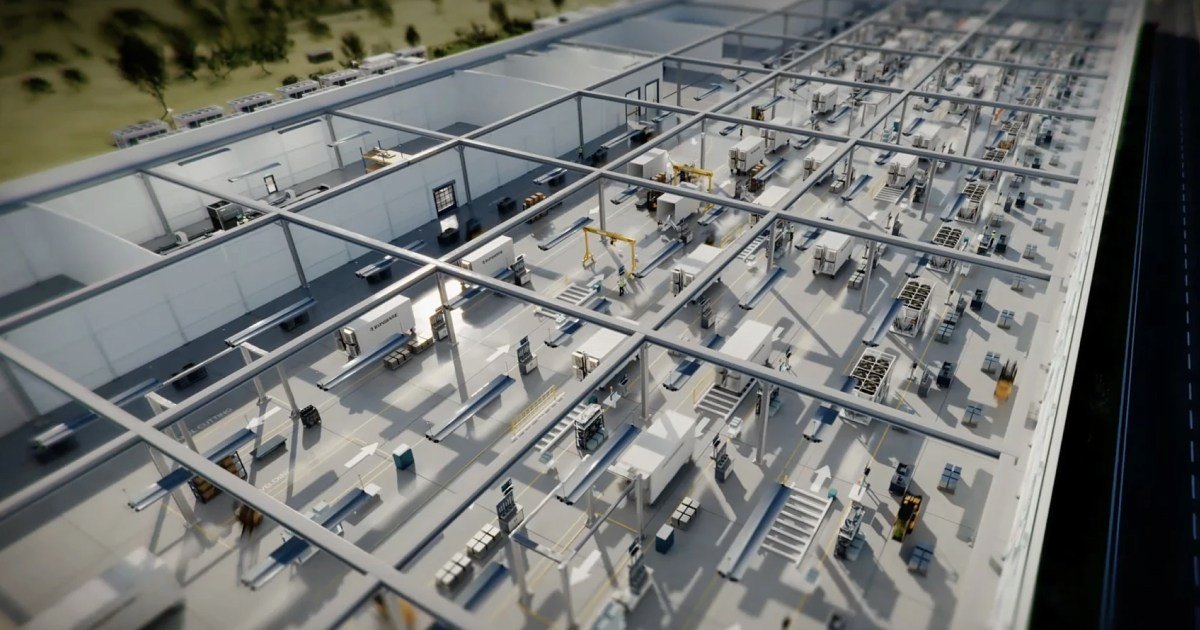
Operational deployment centers on rapid site activation rather than protracted construction. Runware delivers completed Sonic Inference Pods to designated customer land or procures sites directly, activating units within 48 hours of arrival. Thermal management relies on a closed-loop liquid cooling system paired with air-cooled radiators to expel heat. Because the cooling mechanism consumes no continuous water, the pods operate without municipal water connections. Units also run completely silent in ambient temperatures up to 86 degrees Fahrenheit while drawing electricity from standard grid and internet connections.
Hardware integration accommodates evolving chip designs while avoiding civil construction delays. Because pod delivery schedules are shorter than standard GPU lead times, Runware's in-house engineering team designs and tests custom enclosure components while processors are in transit. Customers can rent compute directly from Runware or supply their own accelerators while paying a monthly management fee for pod operations. Runware provides on-site replacement components for failed hardware, while clients handle electricity and internet billing through separate utility arrangements.
Advertisement
Tech Pulse Daily
Get tomorrow's pulse first
Join engineers who read Tech Pulse before stand-up. Free, weekday mornings.
AI data centers be mass-produced like cars?: why it matters now
The shift toward prefabricated modular compute addresses widespread enterprise frustration with multi-year data center construction schedules. Competitors like Crusoe and Schneider Electric also offer prefabricated enclosures, while Nvidia unveiled its Vera Rubin AI factories and DSX POD blueprints earlier this year to standardize infrastructure. Runware differentiates itself by building its own manufacturing facilities rather than licensing blueprints for third parties to construct. This assembly line structure allows operators to bypass real estate permitting hurdles and deploy high-density compute quickly.
Severe electrical grid bottlenecks have made power availability the defining constraint for artificial intelligence expansion. Monolithic campuses planned by hyperscalers like Amazon, Microsoft, and Google demand hundreds of contiguous megawatts, straining regional utility grids. Runware avoids these massive footprints by deploying compact pods across smaller parcels with existing electrical hookups. The startup is collaborating with power providers on a pipeline covering 397 megawatts, with expansion potential to 1.2 gigawatts, prioritizing renewable generation to minimize disruption to local communities.
AI data centers be mass-produced like cars?: who is affected
Enterprise organizations and artificial intelligence startups requiring scalable compute are directly affected by faster hardware turnaround times. Rather than waiting years for real estate developers to finish traditional concrete facilities, technical leaders can build infrastructure plans around factory-manufactured pods that become operational in months. Radulescu noted this modular approach lets teams align capital expenditures with actual chip delivery timelines. Engineering organizations gain dedicated training and inference capacity without funding specialized building management teams or costly custom cooling retrofits.
Regional utilities and municipal governments also encounter a drastically reduced environmental footprint compared to conventional data centers. Because the closed-loop radiator system eliminates evaporative cooling towers, local water supplies remain completely unburdened during operation. Compact site dimensions allow installations on underutilized industrial land without requiring extensive zoning adjustments. Simultaneously, legacy colocation providers face competitive pressure from prefabricated hardware alternatives that deliver fully wired compute clusters to client properties significantly faster than traditional facility contractors.
AI data centers be mass-produced like cars?: what to watch
Execution metrics will reveal whether Runware can validate automotive-style manufacturing over the coming year. The company has secured more than 60 million dollars in total funding, using the 50 million dollar Series A round raised last December to complete its factory while preparing for a future Series B. Runware recruited an experienced plant manager from the automotive industry to oversee assembly alongside its chief of hardware. Analysts will monitor component sourcing, including cooling pumps and fans from Germany and networking silicon from Nvidia.
The critical test lies in avoiding the pitfalls that sank previous hardware startups like electric vehicle manufacturer Arrival, which reached a 13 billion dollar valuation before microfactory production costs caused failure. Runware maintains its economics are protected by cost-effective factory labor relative to high compute values and the use of accessible components. Observers should watch the early next year opening of the second Romanian factory, followed by planned manufacturing expansion into the United States to fulfill its 20-megawatt order pipeline.
Developer Action Items
- ☐ Verify the claim on the official AI data centers mass-produced page (or TechCrunch), not from this recap alone.
- ☐ Name the surface that moved — API, policy, model, hardware, or commercial terms — before you Slack the thread.
- ☐ Assign one owner a day to read the primary material and decide: this-sprint, this-quarter, or noise.
- ☐ Do not change production on day-one coverage. Watch the vendor changelog and one independent write-up first.
AI data centers be mass-produced like cars? FAQ
What is the Runware Sonic Inference Pod?
It is a prefabricated, modular AI data center built inside a factory and shipped ready for installation at customer sites.
How quickly can Runware deploy a modular data center?
Runware aims to bring pods online within 48 hours of site delivery, while factory production time per unit is scaling down from three weeks to a single day.
Does Runware's data center require a dedicated water supply?
No, the pods utilize a closed-loop liquid cooling system equipped with air-cooled radiators, operating without an external water connection and running silently up to 86 degrees Fahrenheit.
How much compute capacity does Runware plan to manufacture?
Runware plans to scale output at its Romanian factory to 30 megawatts per day by 2028, equivalent to nearly 1 gigawatt of capacity each month.
Sources

Author
Dillip Chowdary
Writes Tech Bytes coverage of AI, engineering, and the tools that actually ship. Editor of Tech Pulse Daily.
Related on Tech Bytes
Advertisement