Canva releases its first image generation model
It also analyzes the operational economics behind replacing external provider APIs while Canva navigates revised revenue projections and valuation shifts.
By Dillip Chowdary • Oct 23, 2026 • Source: TechCrunch
Canva launched its first proprietary image generation model, named Canva Craft, built directly by its internal research team to compete with image systems from Google, OpenAI, ByteDance, and Meta. According to TechCrunch's report, the design platform developed the model using human-designed templates from its existing catalog rather than relying on photographic datasets. The model is rolling out across Canva's core interface under the Dream Lab tab, alongside upcoming distribution via developer APIs and third-party AI assistants through Canva's Model Context Protocol tooling.
This report examines how Canva Craft functions under the hood, how it links directly into existing layout tools like Canva Magic, and what the launch means for creators, developers, and platform competitors. It outlines the specific technical architecture Canva selected, the contribution of researchers from Leonardo.ai following that 2024 acquisition, and the cost-reduction models known as Craftfast and Craft-ultrafast currently in development. It also analyzes the operational economics behind replacing external provider APIs while Canva navigates revised revenue projections and valuation shifts.
Canva its first image generation model: what actually changed
Canva transitioned from relying solely on external foundation models to deploying its own first-party image generation system, Canva Craft. Rather than fine-tuning standard open datasets or training exclusively on web photographs, Canva's research group trained the model directly on human-designed templates drawn from its internal library. The training dataset included real layout structures across infographics, menus, social media posts, presentations, posters, and typography-dense collateral. This focused dataset enables Canva Craft to interpret visual design rules directly rather than treating text and layouts as raw pixel arrangements.
Alongside the primary model rollout, Canva confirmed that two lighter and more cost-efficient companion versions, titled Craftfast and Craft-ultrafast, are under active development for early release. Canva Craft itself is immediately available to all registered users on the platform through the Dream Lab tab. Developers will soon gain programmatic access through the Canva API, and the company plans to surface image generation capabilities inside external conversational chatbots such as ChatGPT and Gemini by connecting via Canva's Model Context Protocol.
Canva its first image generation model: how it works
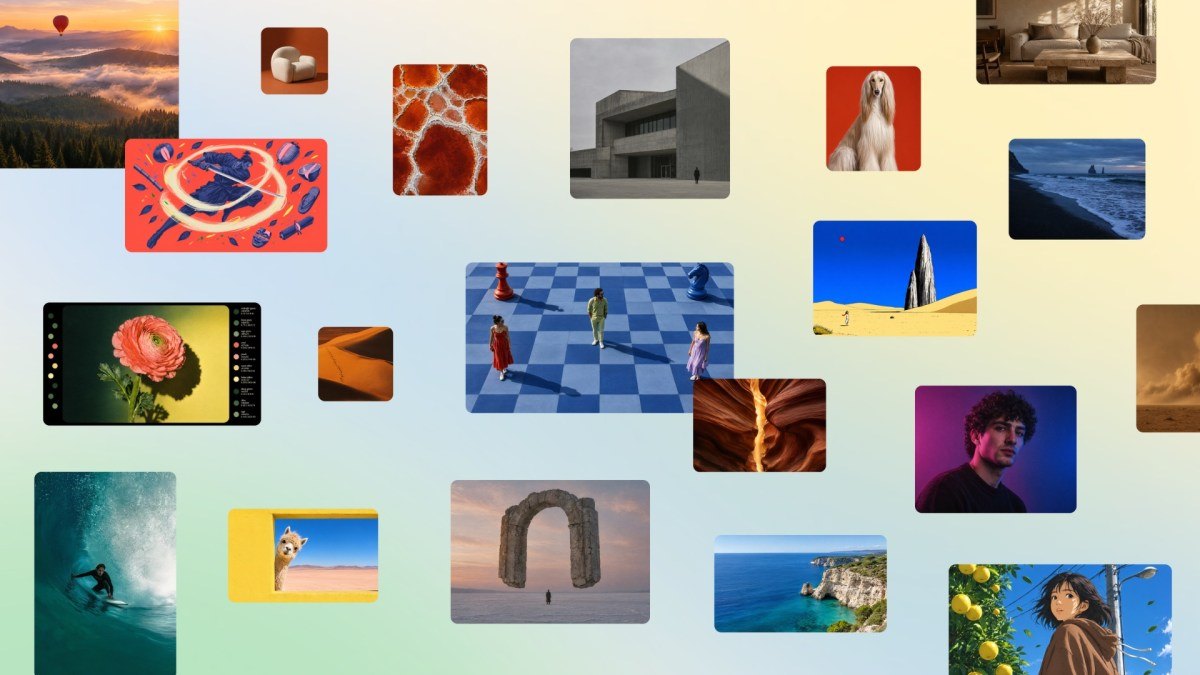
Under the hood, Canva Craft generates images through a two-stage sequential workflow rather than a single direct sampling pass. In the first stage, the architecture processes the user's prompt into an underlying compositional plan, mapping out spatial relationships between elements, relative scale, visual hierarchy, and dedicated coordinate fields for legible text placement. In the second stage, the rendering engine creates an image supporting resolutions up to 2K, capable of outputting across thirty distinct aspect ratios tailored to social networks, physical print media, and custom web canvas standards.
Because the planning stage isolates layout structure before final rasterization, users can apply precise local adjustments to specific sections of an asset without altering unaffected areas of the visual. Output generated by Canva Craft connects directly into Canva Magic, the image-to-design transformer Canva launched last year that decomposes static images into native, editable layers. Researchers from Leonardo.ai, which Canva acquired in 2024, contributed directly to the design and training of this new model architecture.
Advertisement
Tech Pulse Daily
Get tomorrow's pulse first
Join engineers who read Tech Pulse before stand-up. Free, weekday mornings.
Canva its first image generation model: why it matters now
Deploying Canva Craft represents a major internal cost reduction initiative for Canva. The company previously relied on third-party commercial image models to power visual generation across its ecosystem, accumulating substantial API compute and licensing expenses as user activity expanded. By deploying an in-house model alongside the upcoming lightweight Craftfast and Craft-ultrafast variants, Canva captures direct control over inference latency, rendering quality, and operational cost margins across millions of generation requests.
The financial timing of the model launch arrives amid shifting business expectations for the visual communication platform. Canva was on track for $4 billion in annual revenue last year, but the company subsequently trimmed its revenue growth forecasts for 2026. Following that revised guidance, external market analysts reported that Canva's valuation declined from $42 billion down to $35 billion, increasing the strategic necessity of eliminating third-party API dependencies and proving proprietary artificial intelligence capabilities.
Canva its first image generation model: who is affected
The immediate beneficiaries of the launch are everyday Canva users, marketers, and graphic designers who require clean typography and structured layouts rather than unstructured stock photos. Because Canva Craft outputs up to 2K imagery across thirty aspect ratios with legible embedded lettering and isolated coordinate fields, production teams can generate multi-format promotional campaigns without manually redesigning each banner size from scratch. Designers can also push outputs directly into Canva Magic to separate elements into individual editable layers.
External AI providers and commercial API vendors face direct competitive pressure from the release. Canva is positioning Canva Craft against models developed by OpenAI, Google, Meta, and ByteDance, diverting internal traffic away from third-party endpoints. Furthermore, developers building integrations will be able to access the Canva API and integrate Canva Craft into workflows through external chatbots like Gemini and ChatGPT via Canva's MCP framework.
Canva its first image generation model: what to watch
The immediate rollout centers on platform stability inside the Dream Lab tab and the performance consistency of Canva Craft across its thirty aspect ratios. Observers should track the upcoming deployment of Craftfast and Craft-ultrafast, monitoring whether these lightweight iterations maintain acceptable text legibility and object precision while cutting down inference response times and operational computing costs. The delivery timeline of the public Canva API and MCP-based chatbot extensions will indicate how rapidly Canva intends to compete outside its own user interface.
Longer term, the primary benchmark will be whether Canva's proprietary AI stack stabilizes financial growth following its valuation contraction from $42 billion to $35 billion. Analysts will evaluate how effectively the integration of Leonardo.ai research talent translates into sustained technical parity against frontier AI labs, and whether deeper integration between Canva Craft and the Canva Magic layering engine keeps commercial subscribers anchored to the platform over the remainder of 2026.
Developer Action Items
- ☐ Map where OpenAI / ChatGPT / Gemini sits in your stack (SDK, API key, billing, data-processing addendum).
- ☐ Hold non-urgent migrations until the integration or use-of-proceeds roadmap is public — day-one coverage is not a ship signal.
- ☐ If you are mid-contract or mid-POC, ask the vendor what changes for existing customers this quarter.
- ☐ Write the single decision this forces: stay, dual-source, or exit.
Canva its first image generation model FAQ
What is Canva Craft and where can users access it?
Canva Craft is Canva's first in-house image generation model, available to all platform users directly under the Dream Lab tab and coming soon to the Canva API.
How does Canva Craft generate text and layered designs?
The model creates a layout plan mapping spatial hierarchy and text coordinates before rendering up to 2K resolution images, which can convert into layered assets via Canva Magic.
Which teams contributed to developing Canva Craft?
The model was developed by Canva's internal research group with contributions from researchers at Leonardo.ai, which Canva acquired in 2024.
What other model versions is Canva preparing to release?
Canva is developing two cost-efficient variations called Craftfast and Craft-ultrafast to reduce operational compute expenses.
Sources

Author
Dillip Chowdary
Writes Tech Bytes coverage of AI, engineering, and the tools that actually ship. Editor of Tech Pulse Daily.
Related on Tech Bytes
Advertisement