Codex is my Linux Janitor news update news update
Nick Faro used OpenAI's Codex as a Linux janitor to fix AirPods Max Bluetooth conflicts, patch kernel drivers, and update OpenBSD and MediaWiki systems.
By Dillip Chowdary • Nov 08, 2026 • Source: nickfa.ro
Developer Nick Faro configured OpenAI's Codex as an automated maintenance agent across personal Linux systems. According to nickfa.ro's report, treating the model as an on-call mechanic enabled direct troubleshooting of low-level system faults without manual terminal debugging.
This analysis details audio daemon repairs, thermal throttling fixes, driver patches, and server upgrades executed by the assistant. The breakdown serves system administrators, desktop Linux users, and software engineers evaluating whether autonomous coding assistants can manage operating system upkeep.
Codex is my Linux Janitor news update: what actually changed
Faro cataloged persistent operating system defects that previously required manual troubleshooting or reboots, directing Codex to resolve each issue directly at the root. On a desktop experiencing unreliable Bluetooth connectivity with Apple AirPods Max headphones, the audio stack frequently failed to connect or remained locked in the lower-quality HFP voice profile instead of A2DP. Codex audited running processes and discovered that two conflicting audio services, BlueALSA and PipeWire, were operating simultaneously. Terminating the unused BlueALSA daemon restored consistent A2DP connections.
The agent also addressed hardware driver behavior and power management on mobile machines. When an Elgato video capture card failed to resume after system sleep states and corrupted its driver until a reboot, Codex cloned the Linux kernel source tree, identified the driver defect, patched the code, and built a fresh replacement kernel module. On a ThinkPad X1 Carbon laptop experiencing CPU throttling down to sub-1 GHz frequencies under processing loads, Codex identified the throttled utility, configured the daemon, and eliminated performance degradation.
Codex is my Linux Janitor news update: how it works
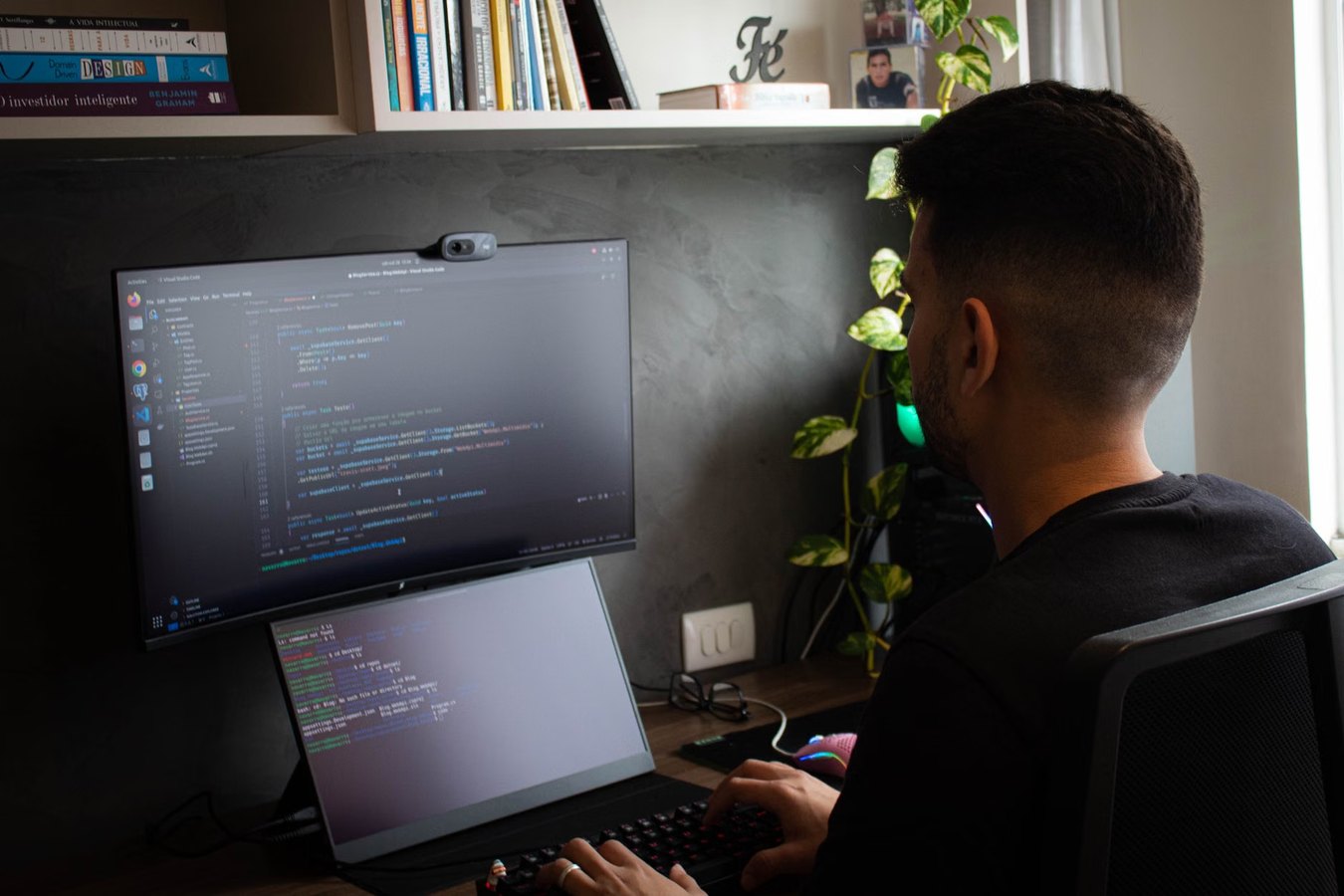
The operational workflow relies on granting Codex direct access to execute diagnostic terminal commands, inspect system state, and alter underlying software installations on demand. When graphical utilities malfunctioned, such as xfce4-screenshooter silently dropping captured desktop images instead of saving them to the clipboard upon clicking the confirmation dialog, the assistant analyzed runtime behavior and created an executable remediation script. This workaround dislodged the stalled clipboard state on demand, avoiding full operating system reboots whenever the screenshot capture mechanism degraded during active work sessions.
For programming environments and remote infrastructure, the assistant navigated codebase deprecations and multi-step version migrations. After an upgrade to Emacs 30 broke the z80-mode package used for Z80 assembly programming, Codex inspected the package source, identified calls to deprecated editor functions, and patched the minor mode to restore functionality. When maintaining an external virtual private server hosting MediaWiki on OpenBSD that had remained on 2024 software revisions, Faro provided credentials alongside php2shell, allowing Codex to execute sequential system upgrades autonomously.
Advertisement
Tech Pulse Daily
Get tomorrow's pulse first
Join engineers who read Tech Pulse before stand-up. Free, weekday mornings.
Codex is my Linux Janitor news update: why it matters
Desktop Linux distributions have long carried a reputation for presenting friction to mainstream computer users, who frequently encounter intermittent driver failures, daemon conflicts, and thermal throttling. Faro likened living with recurring desktop inconsistencies to walking with a pebble in a shoe for years before finally removing it, noting that an on-call system mechanic eliminates the friction of terminal-heavy troubleshooting. By autonomously identifying competing daemons like BlueALSA and PipeWire, resolving driver crashes, and repairing broken editor packages, the model handled edge cases requiring specialized domain expertise.
Beyond local maintenance, the workflow bridged automated local repairs with the broader open-source kernel development ecosystem. After Codex successfully rebuilt and loaded the corrected Elgato capture card kernel module, Faro submitted the generated patch upstream to Linux media subsystem maintainer Hans Verkuil. Verkuil provided constructive review feedback on the driver submission, demonstrating that AI-generated kernel fixes can advance into legitimate upstream patchsets once maintainer review notes are addressed. Automating multi-version OpenBSD and MediaWiki migrations showcases how agentic tools remove the maintenance drag of outdated server deployments.
Codex is my Linux Janitor news update: who is affected
The workflow directly affects desktop Linux practitioners, open-source developers, and multi-platform system administrators who manage diverse peripheral hardware and specialized software packages. Users running complex audio configurations involving Apple AirPods Max, capture cards, or mixed PipeWire environments frequently face configuration conflicts that require manual log inspection and process termination. Similarly, owners of mobile hardware like the ThinkPad X1 Carbon who face aggressive thermal constraints or CPU frequency drops under intensive computational workloads benefit from targeted utilities like throttled without manual power curve research.
Software maintainers and server operators running self-hosted applications on operating systems such as OpenBSD also feel the impact of automated administrative workflows. Upgrading MediaWiki across multiple major releases historically demands strict step-by-step progressions through sequential releases alongside manual configuration merging, which discourages hobbyists and independent administrators from applying timely updates. Delegating iterative version stepping and configuration file reconciliation to autonomous agents allows system operators to overcome upgrade hesitations while maintaining complex software stacks like Z80 assembly on Emacs 30 with minimal manual friction.
Codex is my Linux Janitor news update: what to watch
Key developments to watch center on whether distribution maintainers begin bundling native automated janitor agents directly into consumer-oriented desktop operating systems. Faro observed that if Linux distributions integrate a user-friendly background agent capable of diagnosing and resolving sporadic system faults as they emerge, the operating system could finally overcome the steep usability hurdles that prevent mainstream adoption. Observers should track whether desktop environments like XFCE, GNOME, or KDE experiment with built-in agentic diagnostic harnesses that monitor clipboard daemons, audio routing, and thermal throttling policies autonomously.
Future technical milestones also depend on the progress of Faro's kernel patch submission for the Elgato capture card driver following Hans Verkuil's upstream review guidance. Integrating maintainer feedback and resubmitting the patchset will serve as a practical test of whether AI-assisted kernel maintenance can withstand rigorous kernel community standards over the long term. In addition, security considerations surrounding agentic root access, such as granting assistants VPS control via tools like php2shell, will dictate whether autonomous system maintenance remains an enthusiast pattern or becomes standard administration practice.
Developer Action Items
- ☐ Inventory whether OpenAI / Apple / Linux runs in prod, CI, staging, or on laptops before you debate severity.
- ☐ Confirm the vendor's fixed build for OpenAI / Apple / Linux from HN Claude/Codex/Fable, then schedule the patch window.
- ☐ If you cannot patch today, isolate the service, rotate tokens that sat on the affected surface, and raise the logging floor.
- ☐ Record the decision and residual risk so the next on-call does not re-litigate whether you are exposed.
Codex is my Linux Janitor news update news FAQ
How did Codex fix the AirPods Max Bluetooth issue?
Codex identified competing BlueALSA and PipeWire daemons and terminated BlueALSA, restoring A2DP audio.
What was the Elgato capture card driver fix?
Codex cloned the Linux kernel source, repaired the driver defect caused by system sleep, and built a working replacement kernel module.
How did Codex resolve ThinkPad X1 Carbon throttling?
Codex installed and configured the throttled power utility, preventing CPU cores from dropping to sub-1 GHz frequencies.
Sources

Author
Dillip Chowdary
Writes Tech Bytes coverage of AI, engineering, and the tools that actually ship. Editor of Tech Pulse Daily.
Related on Tech Bytes
Advertisement