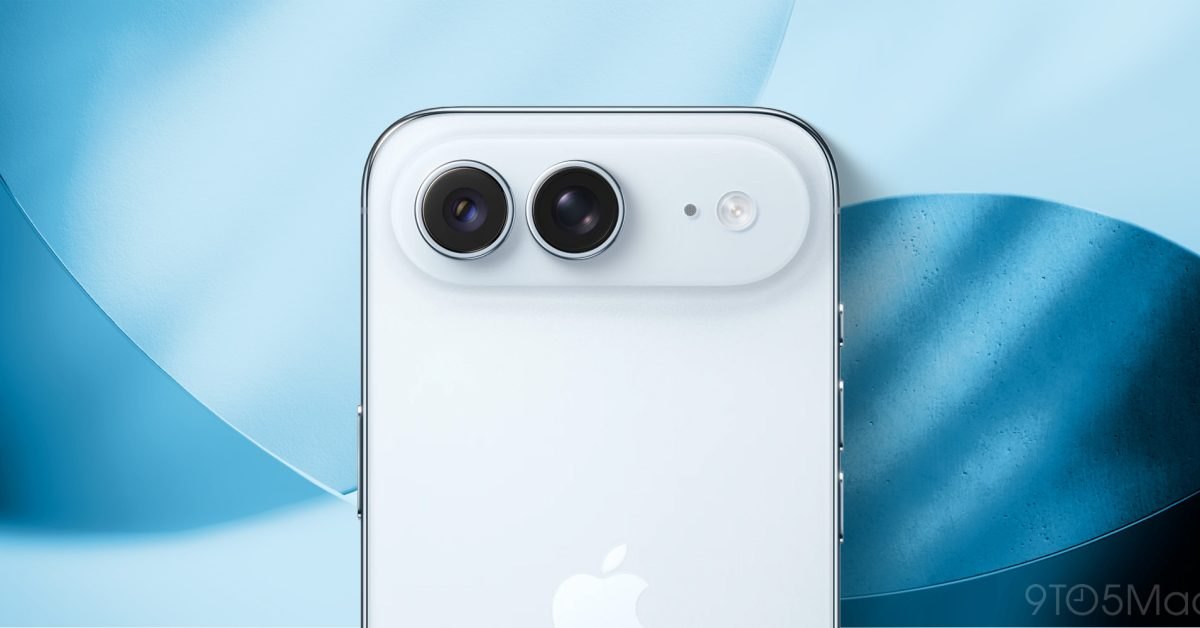
iPhone Air 2 dummy unit shows off new dual-camera design
Leaked dummy units reveal Apple's iPhone Air 2 will feature a horizontal dual-camera system and an A20 Pro chip alongside a 9GB RAM base iPhone 18 next spring.
By Dillip Chowdary • Nov 20, 2026 • Source: 9to5Mac
At a glance
- Manufacturer
- Apple
- Target models
- iPhone 18 and iPhone Air 2
- Expected launch
- Next spring
- Air 2 cameras
- Dual horizontal (48MP Main plus Ultra Wide)
- Air 2 processor
- Apple A20 Pro chip
- iPhone 18 RAM
- 9GB RAM (up from 8GB on iPhone 17)
Physical dummy units shared online by Sonny Dickson offer an early look at Apple's upcoming smartphone hardware planned for release next spring, according to 9to5Mac's report on the leaked casings. The hands-on leak showcases a redesigned iPhone Air 2 alongside the standard iPhone 18, detailing Apple's visual and mechanical adjustments. The company is preparing both handsets as part of its upcoming product cycle scheduled for early next year.
This breakdown details the exterior chassis revisions, camera module modifications, thermal management updates, and processor selections revealed across both incoming models. Readers following Apple smartphone hardware cycles, industrial design transitions, and component allocations can examine how the second-generation ultra-thin model compares against its single-lens predecessor. It also outlines component changes between the base handset and the higher-tier Air edition.
01Dummy units and spring launch timeline
Early manufacturing dummy units published on X by Sonny Dickson present physical representations of Apple's upcoming smartphone lineup. These metal and plastic mockups are standard references circulated across the accessory ecosystem to verify case dimensions before retail distribution. The newly revealed shells show Apple readying the hardware for commercial release next spring.
The visual leak highlights a clear contrast between the two upcoming handsets. While the secondary Air model incorporates noticeable external tooling changes, the base iPhone 18 remains closely aligned with current industrial tooling. Both units demonstrate how the company intends to position its spring device catalog across standard and specialized categories.
Hardware mockups of this type typically confirm exterior button placements, camera plateau boundaries, and thickness profiles ahead of factory mass production. Dickson's post reveals that the upcoming release window will introduce two distinct form factors simultaneously. This dual-device launch strategy establishes separate hardware priorities for mainstream buyers and slim-profile enthusiasts.
02Dual horizontal cameras on pill plateau
The most prominent visual change on the iPhone Air 2 dummy unit is an expanded dual-camera assembly positioned within an elevated pill-shaped plateau. Unlike the first-generation iPhone Air, which arrived with a solitary 48MP Main sensor, this revised unit incorporates two discrete lenses. Apple arranged the two camera sensors horizontally side by side across the rear casing.
This horizontal arrangement mirrors the layout seen on the iPhone Duo, moving away from vertical camera stacking. The second lens opening on the chassis accommodates an Ultra Wide camera to work alongside the primary 48MP sensor. Adding this secondary optical component resolves the single focal-length restriction of the original ultra-thin model without expanding the module into a square bump.
Maintaining the slim profile of the Air chassis required integrating the dual optics into a compact, raised island. The pill-shaped plateau protects the glass lenses while keeping the surrounding back glass uniform and thin. By pairing a wide sensor with an ultra-wide sensor, the device broadens everyday shooting options for users upgrading from single-lens builds.
03A20 Pro silicon and vapor cooling
Advertisement
Tech Pulse Daily
Get tomorrow's pulse first
Join engineers who read Tech Pulse before stand-up. Free, weekday mornings.
Underneath the revised exterior, the iPhone Air 2 is expected to run on Apple's premium A20 Pro application processor. Pairing higher-tier silicon with a reduced-thickness chassis requires specialized thermal management. The Information has reported that the handset will incorporate a vapor chamber cooling system to dissipate heat across the internal structure.
Apple first introduced vapor chamber cooling technology on the iPhone 17 Pro to manage heavy workloads and reduce thermal throttling. Adapting that cooling structure into the Air lineup enables the A20 Pro chip to maintain sustained performance without relying on bulky chassis vents. Engineers are also working to optimize battery runtime within the constrained interior envelope of the thin housing.
Display hardware is also scheduled for subtle refinement alongside the silicon and cooling improvements. Supply chain leaks indicate the iPhone Air 2 will feature a reduced Dynamic Island cutout at the top of the screen. Shrinking this sensor array increases usable screen real estate while preserving biometric scanning hardware and notification indicators.
04Base model memory and chassis carryover
In contrast to the Air redesign, the base iPhone 18 displays an exterior form factor largely unchanged from the iPhone 17. The rear chassis, camera housing dimensions, and outer frame contours maintain identical geometric boundaries to prior production units. Apple appears to be focusing its development budget on internal component updates while maintaining stable tooling costs.
Internal silicon for the standard handset will center on Apple's standard A20 chip rather than the Pro-tier processor. Analyst Ming-Chi Kuo has reported that the base model will receive 9GB of RAM, representing an increase over the 8GB memory configuration used in the iPhone 17. This memory bump supports background processing requirements without increasing manufacturing expense.
The conservative exterior design indicates Apple is prioritizing cost controls on the entry-tier model while shifting premium styling to specialized models. Retaining existing tooling allows production yields to remain stable across international assembly lines. Buyers selecting the standard variant will see modest generational processing gains while retaining familiar physical ergonomics.
05Hardware divergence across the spring lineup
The physical differences between the two units demonstrate a divergence in Apple's spring smartphone portfolio. While the baseline model retains established manufacturing molds to protect profit margins, the Air edition receives targeted investments in camera versatility, cooling, and screen geometry. This division gives retail shoppers a direct choice between conventional value and specialized engineering.
Component tracking reports highlight how Apple distributes technical capabilities across its product tiers. While baseline devices emphasize unit economics and assembly consistency, secondary variations integrate specialized hardware to justify higher positioning. The comparative matrix below outlines the primary camera, processor, and thermal specifications reported for the upcoming spring hardware.
| Model | Rear Camera System | Processor | Key Hardware Distinction |
|---|---|---|---|
| iPhone Air (Gen 1) | Single 48MP Main camera | Preceding generation | Single lens layout |
| iPhone Air 2 | Dual horizontal (48MP Main + Ultra Wide) | A20 Pro | Vapor chamber cooling |
| iPhone 17 | Standard layout | Preceding generation | 8GB RAM |
| iPhone 18 | Design similar to iPhone 17 | A20 | 9GB RAM |
Note: Apple is expected to introduce both the iPhone 18 and the iPhone Air 2 during its hardware launch window next spring, though component configurations and final chassis dimensions remain subject to adjustments before commercial factory production begins across partner assembly facilities.
Frequently asked questions
What camera changes are coming to the iPhone Air 2?
The iPhone Air 2 dummy unit features a dual-camera system arranged horizontally on a pill-shaped plateau. The new design adds an Ultra Wide camera alongside the 48MP Main camera found on the first-generation model.
What processor and cooling system will the iPhone Air 2 use?
The iPhone Air 2 is expected to run on an A20 Pro chip. It will also feature a vapor chamber cooling system originally introduced on the iPhone 17 Pro to help manage heat.
How does the base iPhone 18 differ from the iPhone 17?
The base iPhone 18 retains an exterior design largely unchanged from the iPhone 17. Internally, it is expected to feature an A20 chip and 9GB of RAM, an increase from the 8GB of RAM on the iPhone 17.
When are the iPhone 18 and iPhone Air 2 expected to release?
Apple is expected to launch both the iPhone 18 and iPhone Air 2 sometime next spring.
Sources

Author
Dillip Chowdary
Writes Tech Bytes coverage of AI, engineering, and the tools that actually ship. Editor of Tech Pulse Daily.
Related on Tech Bytes
Advertisement