Korea’s AI Ecosystem Advances and Secures Agentic AI With NVIDIA
South Korea advances agentic AI as Hyundai tests NemoClaw blueprints and AIM Intelligence pairs Starfort with NVIDIA OpenShell to secure enterprise workflows.
By Dillip Chowdary • Nov 09, 2026 • Source: NVIDIA Blog
NVIDIA announced expanding partnerships across South Korea's artificial intelligence ecosystem to advance and secure autonomous enterprise agents, as reported in NVIDIA Blog's report. The initiative pairs open models with dedicated security runtimes.
Hyundai Motor Group is exploring NVIDIA NemoClaw blueprints and the OpenShell runtime, while AIM Intelligence is integrating its Starfort platform with OpenShell. Concurrently, LG AI Research opened application programming interface access for K-EXAONE-2.5, built with NVIDIA Nemotron datasets including a regional synthetic persona library.
This report examines the architecture, operational mechanisms, and organizational impact of the newly deployed agentic AI safeguards and open model frameworks across Korean industry. The coverage provides systems architects, security engineers, and software researchers with verified implementation facts behind OpenShell and Starfort. Readers will examine how sandboxed execution environments, policy-based access rules, synthetic persona datasets, and open model architectures interact to protect corporate networks across factory robotics, enterprise workflows, and public utilities.
01What actually changed
South Korea's leading industrial and technology organizations have initiated implementations of open models and execution safeguards designed for autonomous agent workflows. Automotive manufacturer Hyundai Motor Group began evaluating NVIDIA NemoClaw blueprints alongside the OpenShell runtime to test how software agents handle engineering and corporate data.
Simultaneously, security provider AIM Intelligence linked its Starfort agent control system with OpenShell to protect workplace agent deployments against operational vulnerabilities. On the model tier, LG AI Research opened public application programming interface access for K-EXAONE-2.5, expanding access to a domestically tuned model.
The release of open assets introduced the Nemotron-Personas-Korea dataset, containing seven million fully synthetic Korean personas derived from official Korean statistical publications. Released as part of the broader NVIDIA Nemotron open model family, the dataset provides local development teams with verifiable cultural grounding for training runs and evaluation benchmarks.
Rather than relying on generic multilingual corpuses, model builders can benchmark agent behavior against structured synthetic profiles. This release coincided with related sovereign AI developments, including Dynamo recipes that bring domestic open models into production pipelines.
02How it works
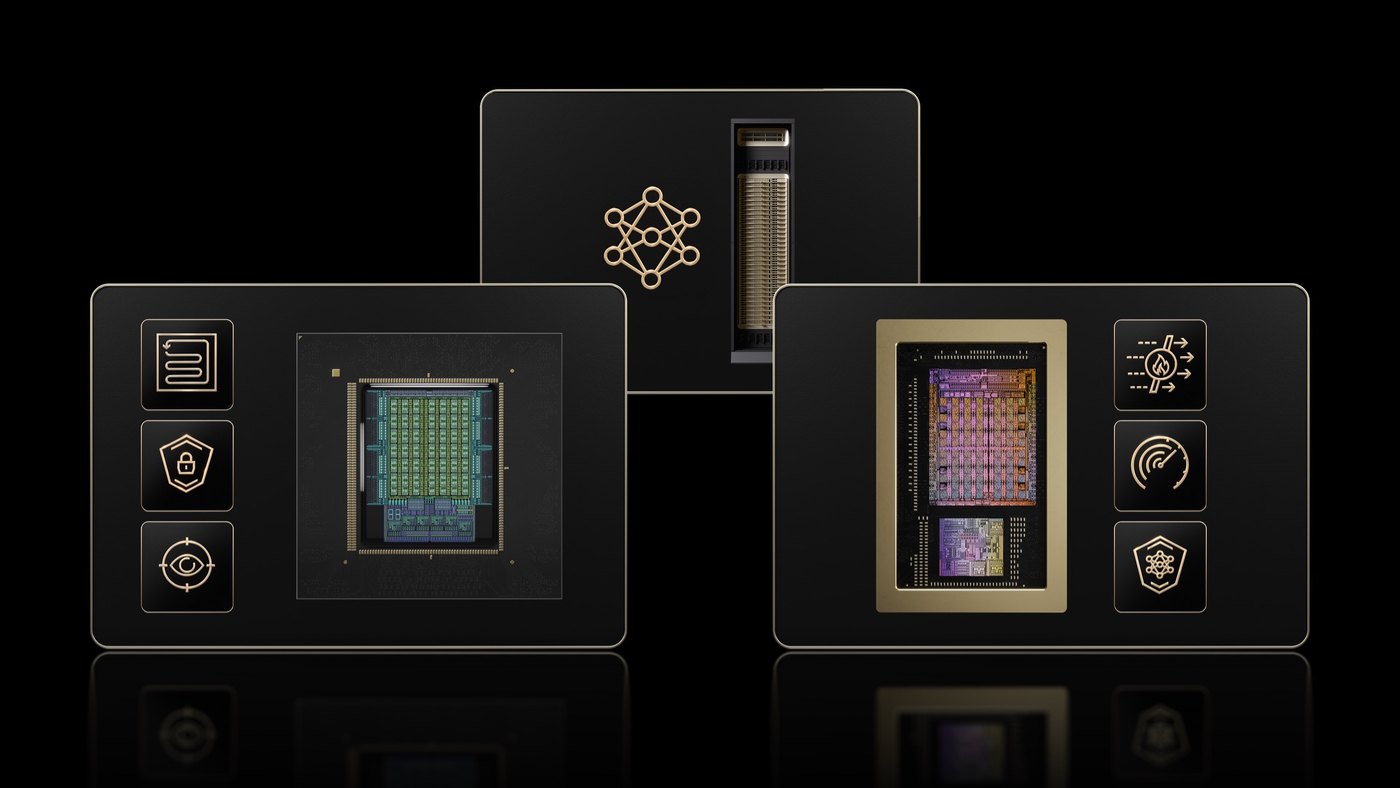
At the foundation of the runtime architecture sits NVIDIA OpenShell, an element within the broader NVIDIA Open Agent Safety Platform. OpenShell enforces sandboxed execution boundaries around agent operations, ensuring that autonomously executing code paths cannot interact with host infrastructure without explicit authorization.
The runtime applies policy-based controls to restrict tool access, governing whether an agent can query internal databases, invoke external APIs, or execute system-level scripts. By mediating communication between agents and digital assets, OpenShell prevents autonomous software loops from escalating privileges or exfiltrating sensitive records.
AIM Intelligence layers its Starfort agent control platform over OpenShell to provide active threat inspection alongside runtime isolation. While OpenShell manages network perimeters and system calls, Starfort inspects agent inputs and outputs to detect malicious instructions, jailbreak attempts, and data leakage before execution.
When an agent receives an instruction, Starfort evaluates the payload for adversarial intent, while OpenShell confirms that subsequent tool actions conform to governance policies. Together, the stack enables agents to complete multi-step tasks across productivity environments, robotics, and industrial facilities without exposing networks to untrusted instructions.
Advertisement
Tech Pulse Daily
Get tomorrow's pulse first
Join engineers who read Tech Pulse before stand-up. Free, weekday mornings.
03Why it matters
Deploying autonomous agents in mission-critical corporate settings has historically introduced security vulnerabilities, as conventional firewalls cannot interpret the multi-turn decision logic of autonomous software. Without sandboxed environments, an agent instructed to streamline manufacturing workflows might inadvertently leak private records or execute harmful external commands.
By pairing OpenShell with Starfort, enterprise teams establish rigorous operational guardrails that allow autonomous agents to operate on real-world networks with safety guarantees. This implementation proves that autonomous productivity tools can safely handle enterprise data when isolated execution controls and behavioral inspection mechanisms operate in tandem.
For foundational model development, the availability of specialized datasets directly resolves data sovereignty and regional contextual accuracy deficits. LG AI Research utilized Nemotron-Personas-Korea to align K-EXAONE-2.5 with official domestic demographic realities, avoiding the hallucinations that occur when global models approximate Korean professional norms.
Access to seven million statistically grounded personas enables model creators to stress-test agent reasoning against representative citizen scenarios. Coupling locally grounded open models with standardized agent safety runtimes ensures that regional companies deploy high-performing domestic models rather than depending entirely on proprietary overseas application programming interfaces.
04Who is affected
The immediate operational impact centers on industrial manufacturers and technology enterprises deploying agentic workflows across production and administrative environments. Hyundai Motor Group engineering teams gain structured blueprints through NemoClaw to safely integrate agent systems into vehicle software development, employee tasks, and factory assembly lines.
Enterprise workers utilizing AI agents for administrative workflows will interact with systems governed by Starfort and OpenShell, ensuring sensitive internal records remain protected. Furthermore, AIM Intelligence is preparing a preliminary proof of concept targeted at the public energy sector, bringing secure agent architectures to municipal power utilities and grid infrastructure.
Software developers, independent software vendors, and enterprise data science teams represent another major group directly influenced by these platform launches. Developers building specialized enterprise agents now have programmatic application programming interface access to LG AI Research's K-EXAONE-2.5, allowing them to embed a verified domestic open model into existing business software.
At the same time, teams constructing proprietary foundational models can download the open Nemotron-Personas-Korea dataset to enrich training corpuses and conduct rigorous security evaluations. Industrial engineers working on robotics deployments will also benefit from standardized execution controls as agents transition into physical machinery.
05What to watch
Industry observers should monitor the progress of AIM Intelligence's upcoming proof of concept within the public energy sector to evaluate how sandboxed agent runtimes perform under utility reliability mandates. If successful, that deployment will establish a benchmark for applying OpenShell and Starfort across municipal infrastructure, accelerating agent adoption in transportation and manufacturing.
Observers should also track adoption metrics for LG AI Research's K-EXAONE-2.5 application programming interface among regional software builders to see whether domestic models capture market share from overseas alternatives. Technical benchmarks evaluating K-EXAONE-2.5 will indicate how effectively synthetic persona grounding translates into reasoning.
Future developments will also depend on how Hyundai Motor Group moves from initial exploration of NemoClaw blueprints and OpenShell into live automotive deployments. Observers should watch for technical case studies detailing how the automaker implements agentic software across vehicle design cycles, connected services, and automated factory robotics.
Additional releases within the NVIDIA Nemotron family, including updated sovereign AI recipes and open model weights, will indicate how rapidly collaborative ecosystems match proprietary systems. As more organizations adopt the NVIDIA Open Agent Safety Platform, the interaction between open synthetic datasets, local models, and sandboxed runtimes will define enterprise agent standards.
Korea’s AI Ecosystem Advances and Secures FAQ
What is NVIDIA OpenShell and what role does it play in agentic AI?
NVIDIA OpenShell is a secure runtime within the NVIDIA Open Agent Safety Platform that provides sandboxed execution and policy-based controls. It safeguards sensitive corporate data, manages tool access, and governs the actions of autonomous software agents.
How is AIM Intelligence integrating its technology with NVIDIA OpenShell?
AIM Intelligence is integrating its Starfort agent control platform with OpenShell to merge runtime access restrictions with real-time detection of malicious instructions and data leaks. The company is also evaluating a preliminary proof of concept for public energy infrastructure.
What is Nemotron-Personas-Korea and how is it used?
Nemotron-Personas-Korea is an open dataset featuring seven million fully synthetic Korean personas derived from official national statistics. Developers and model builders use it to ground AI training runs and evaluations in local demographic and cultural contexts.
Which model from LG AI Research is launching API access?
LG AI Research is launching application programming interface access for K-EXAONE-2.5. The model was trained using NVIDIA Nemotron datasets, including the Nemotron-Personas-Korea synthetic library.
Sources

Author
Dillip Chowdary
Writes Tech Bytes coverage of AI, engineering, and the tools that actually ship. Editor of Tech Pulse Daily.
Related on Tech Bytes
Advertisement