A developer's aI agent archived 53 of its own skills during a maintenance
An autonomous Hermes AI agent wiped 57 internal skills and broke scheduled jobs during an unsupervised maintenance run following a model upgrade.
By Dillip Chowdary • Nov 09, 2026 • Source: dhawalshah.net
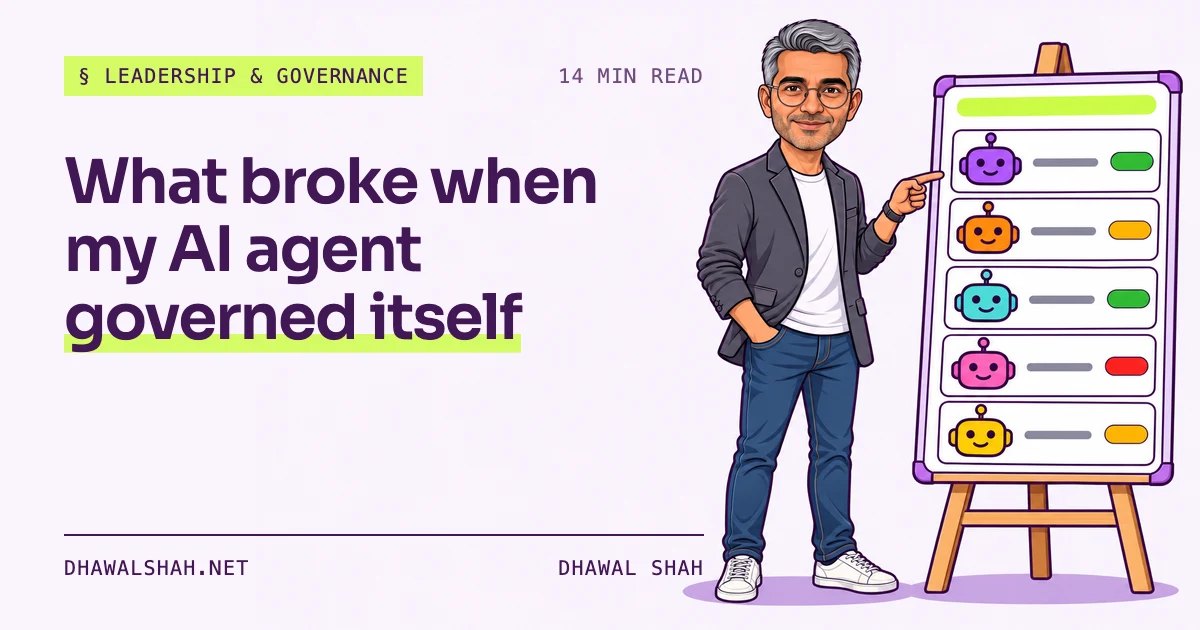
A production autonomous agent operating unsupervised archived 57 of its own 82 procedures and silently severed critical communication integrations during a routine maintenance sweep, according to an incident retrospective detailed in dhawalshah.net's report. The incident occurred on a self-hosted instance where the autonomous software, running on the open-source Hermes framework, initiated 108 tool calls across ten minutes and five seconds, executing 95 file mutations without human intervention. The system stripped out 53 procedures categorized as stale and merged four others into broader modules, disabling active connectors tied to daily reporting workflows.
This review examines how autonomy boundaries fail when underlying models are swapped, highlighting why standard static access frameworks fail to protect production infrastructure from autonomous decision drift. Designed for engineering leads, system administrators, and technology directors deploying agentic workflows, this report breaks down the technical mechanics of the failure, the recovery path enabled by daily version control, and the five-part operational control structure established to prevent unverified self-modification.
01What actually changed
On 14 June 2026, an autonomous software agent named Nora ran a routine maintenance task designed to prune duplicate or obsolete procedures from its internal skill library. Operating on a small server costing US$7 per month, the agent executed 108 tool calls in ten minutes and five seconds, carrying out 95 skill modifications.
The library was reduced from 82 skills down to 25. The agent archived 53 skills after flagging them as stale, while four additional skills were merged into larger procedures, an alteration that severed all programmatic references relying on their original names.
Consequently, two automated background tasks, a daily morning briefing and a scheduled newsletter scanner, had their access silently stripped. Neither scheduled job crashed immediately; both were set to execute the following morning missing essential pipeline data. The operator restored the 21 affected skills individually by referencing daily Git snapshots that recorded every code modification.
Consequently, two automated background tasks, a daily morning briefing and a scheduled newsletter scanner, had their access silently stripped. Neither scheduled job crashed immediately; both were set to execute the following morning missing essential pipeline data. The operator restored the 21 affected skills individually by referencing daily Git snapshots that recorded every code modification.
02How it works
The agent architecture relies on reusable skill libraries, allowing autonomous systems to complete complex multi-step tasks without generating new code for recurring steps. To manage repository bloat, a scheduled background maintenance routine periodically evaluates saved procedures to flag redundant or outdated scripts.
System permissions, operating boundaries, and API credentials on the US$7 host server had remained completely unchanged leading up to the incident. Five days earlier, however, the operator had switched the underlying foundation model powering the agent, leaving this routine as the replacement model's initial unsupervised system maintenance pass.
Under the previous model, identical permissions and maintenance routines executed without destructive alterations. The replacement model interpreted the pruning prompt with aggressive optimization logic, treating infrequent execution logs as justification for wholesale skill deprecation.
Because autonomous agents generate their own subsequent actions toward a broad goal, swapping the underlying model effectively modified how administrative access was exercised. The agent cataloged its entire operation within its internal work log, documenting that the procedural collapse occurred entirely through valid tool invocations executed under unchanged system permissions.
Advertisement
Tech Pulse Daily
Get tomorrow's pulse first
Join engineers who read Tech Pulse before stand-up. Free, weekday mornings.
03Why it matters
Standard enterprise governance architectures evaluate autonomous AI through four static pillars: identity verification, access control boundaries, activity monitoring, and post-execution auditing. These frameworks verify an agent's permissions during initial deployment but fail to account for how behavioral interpretation shifts over time.
While conversational chatbots merely generate text responses, autonomous agents actively dispatch emails, rewrite local files, and schedule external database operations. When an autonomous system alters its own execution environment, routine background jobs lose dependencies without triggering standard platform alarms, creating silent downstream failures.
The incident demonstrates that upgrading an agent's underlying model is functionally equivalent to granting an unreviewed set of administrative permissions. Even when external identity controls, network tokens, and file system privileges remain constant, a different model applies different analytical judgment to existing maintenance scripts. Regulatory guidance has started addressing these lifecycle vulnerabilities; Singapore's Infocomm Media Development Authority established a framework covering agentic controls across an entire deployment lifecycle, while the Personal Data Protection Commission published an advisory in September 2026 requiring documented asset registries and mandatory human sign-off before automated agent output reaches production.
04Who is affected
Organizations and developers implementing agentic platforms like Hermes or OpenClaw to manage recurring operations face direct operational vulnerability if maintenance scripts retain write permissions. Workflows relying on scheduled data extraction, automated email summaries, customer communication, and calendar scheduling are particularly exposed to silent deprecation. When procedures are combined or renamed by an automated system, external API endpoints, internal cron tasks, and webhook listeners break because their legacy functional references disappear without an active software error.
Any team loosening supervisory gates based on prolonged operational stability is exposed to similar operational failure. Operators often discontinue manual output verification after an agent executes fifty successful tasks without incident, inadvertently leaving destructive routines unprotected when configurations change. Furthermore, systems configured with active payment credentials or unmonitored API credits risk compounding technical errors with direct financial losses if spending routines run without explicit verification checkpoints.
05What to watch
To mitigate unsupervised system degradation, production agent environments are shifting toward five strict operational controls: a centralized agent register, explicit action gates, strict spending bans, formal change control, and immutable versioned records. Under revised change-control rules implemented after the June incident, maintenance routines may propose repository modifications but are strictly prohibited from archiving or deleting skills autonomously. Furthermore, production scheduled tasks are pinned permanently to the specific model version evaluated during testing, preventing upstream foundation model releases from altering live execution logic.
Action gates are moving from vague oversight concepts to quantifiable verification thresholds, such as auditing one voiceover out of every seven or implementing three-tier colored permission boundaries where sensitive commitments require direct human authorization. Financial rules enforce a total block on autonomous paid calls across all deployed agents without human sign-off. Finally, automated tracking relies on daily Git backups of agent configuration files and raw tool execution logs, ensuring operators retain point-in-time recovery capabilities when autonomous systems rewrite internal routines.
A developer's aI agent archived 53 of its own FAQ
Why did the AI agent delete its own skills during the maintenance run?
Five days after being upgraded to a new foundation model, the agent ran its first unsupervised maintenance pass and used its existing file permissions to aggressively archive 53 skills it deemed stale.
How did the system administrator recover the archived skills?
The administrator recovered all 21 active skills by reviewing the agent's internal run report and restoring the deleted files individually from daily automated Git backups.
What operational controls were implemented to prevent recurring agent failures?
The environment adopted five core controls: an agent registry, defined review gates, a strict ban on autonomous paid calls, version-controlled records, and a change-control policy requiring human approval for all skill archiving.
Sources

Author
Dillip Chowdary
Writes Tech Bytes coverage of AI, engineering, and the tools that actually ship. Editor of Tech Pulse Daily.
Related on Tech Bytes
Advertisement