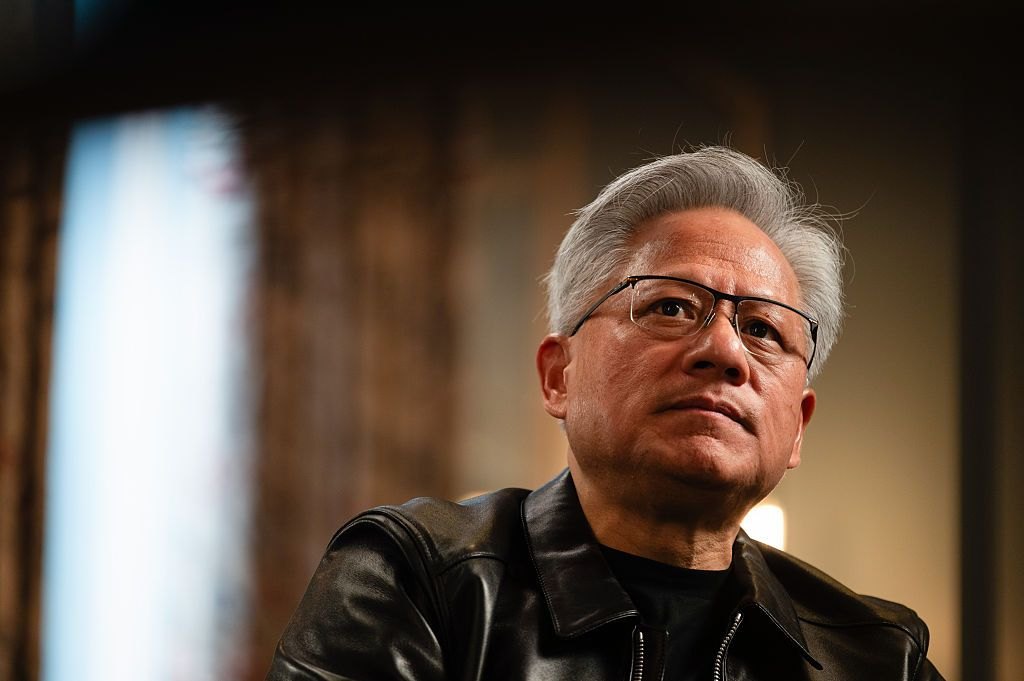
The fallout from Nvidia’s Jensen Huang scandal continues
Nvidia posted healthy earnings and rejected calls to reinstate ousted CEO Jensen Huang while stopping sales of its advanced H200 chips across Chinese markets.
By Dillip Chowdary • Nov 20, 2026 • Source: TechCrunch Startups
At a glance
- Processor status
- H200 sales stopped in China
- CEO transition
- Jensen Huang ousted from Nvidia
- Leadership petition
- Elon Musk signed reinstatement petition
- Anthropic stake
- Amazon and Google will own nearly 30%
- Autonomous transit
- Waymo suspended freeway rides nationally
- Personal orders
- Tesla Cybercab opened with fine print
Nvidia delivered its latest quarterly earnings report showing healthy financial growth and projecting continued momentum, while navigating the immediate fallout from the ouster of chief executive officer Jensen Huang. The corporate milestone arrived alongside a strategic decision to halt sales of H200 artificial intelligence chips in China and reject formal demands to bring Huang back to the executive suite, as detailed in TechCrunch Startups's report.
This analysis details Nvidia's executive leadership dispute, supply restrictions in Chinese semiconductor markets, and broader industry developments including Anthropic's public market debut. The breakdown is designed for enterprise technology leaders, hardware procurement teams, and institutional investors tracking compute supply chains and capital cycles across autonomous transport and clean technology.
01Nvidia earnings growth and executive dismissal decisions
Nvidia reported sustained commercial expansion in its latest quarterly earnings filing, pairing higher revenue totals with explicit forward guidance that business growth will continue. The positive numbers landed against internal disruption following the dismissal of Jensen Huang from the chief executive role. Company leadership moved to reassure markets that ongoing enterprise demand for computing infrastructure remains fundamentally durable despite the leadership transition.
The chipmaker firmly dismissed organized appeals to bring Huang back to lead the business, refusing calls from prominent industry figures seeking his reinstatement. Tesla chief executive Elon Musk joined other technology leaders in signing a formal petition urging the board to restore Huang to his post. Questions regarding Nvidia's corporate security operations also surfaced as leadership maintained its decision to keep Huang removed from the enterprise.
Company leadership maintained its stance even as external pressure mounted from technology executives across Silicon Valley. Discussion led by Anthony Ha, Kirsten Korosec, and Tim De Chant highlighted that the boardroom transition poses critical governance tests for the enterprise. The firm reiterated that current operational momentum and product delivery schedules will proceed without reinstating its former executive leader.
02H200 chip sales halt across Chinese markets
Nvidia announced an immediate halt to sales of its H200 accelerator processors across Chinese enterprise markets, reshaping international distribution lines. The move terminates shipments of high-performance computing hardware into a critical geographic territory that historically generated substantial commercial revenue. Enterprise customers in the region face direct constraints on expanding AI infrastructure pipelines relying on Nvidia's specialized architecture.
Note: Nvidia confirmed it will stop selling its H200 chips in China, curtailing regional hardware availability despite ongoing enterprise demand. Regional clients cannot access direct shipments of the advanced computing processors under the revised distribution stance. The company has not announced alternative hardware offerings for affected data center operations in the country.
The decision to end H200 sales in China arrives while Nvidia promises continued global commercial growth in its broader quarterly outlook. Supply chain analysts noted that cutting off regional deliveries tests whether surging orders in Western markets can offset lost enterprise business. The restriction sets a clear commercial boundary for Nvidia's high-bandwidth memory hardware line in Asian facilities.
03Anthropic public listing and circular funding ownership
Advertisement
Tech Pulse Daily
Get tomorrow's pulse first
Join engineers who read Tech Pulse before stand-up. Free, weekday mornings.
Anthropic prepared to enter public financial markets, setting up an initial public offering that tests the sustainability of artificial intelligence capitalization. The stock market debut exposes the industry's circular funding architecture to open public investor scrutiny. Market participants are watching whether foundational model developers can maintain high valuations without reliance on private reciprocal funding loops between partners.
Tech giants Amazon and Google will collectively hold close to thirty percent equity ownership in Anthropic following the public offering. Their concentrated joint stake highlights how foundational model companies maintain deep financial and infrastructural links with hyperscale cloud providers. The listing will demonstrate whether high corporate equity concentrations deliver viable liquidity and independent governance under standard stock exchange rules.
Industry observers noted that Anthropic's public market transition arrives at a delicate moment for artificial intelligence capital structures. Financial returns from the company's offering will provide benchmark data to evaluate venture investments across competitive foundation model developers. The resulting market valuation will indicate whether enterprise software revenues justify massive underlying semiconductor infrastructure spending.
04National freeway suspensions and personal Cybercab reservations
Autonomous driving operations experienced significant regulatory and operational adjustments across major American mobility platforms. Alphabet subsidiary Waymo made the decision to suspend its autonomous vehicle rides on freeways nationwide, pausing high-speed commercial deployments. The company halted highway routes while evaluating operational parameters, restricting current passenger operations to surface street networks in active urban markets.
Concurrently, Tesla opened customer reservations for personal orders of its dedicated Cybercab autonomous vehicle, expanding commercial sales channels beyond fleet networks. The purchase opportunity carries substantial contractual stipulations and detailed fine print governing operational responsibilities and vehicle delivery timelines. Potential private owners must evaluate restrictive legal disclosures before committing capital to the dedicated robotaxi platform.
The divergence between Waymo's national highway pause and Tesla's consumer vehicle sales push marks a critical phase in autonomous mobility. Public transport authorities and private buyers are evaluating how system reliability metrics match commercial claims across different operating domains. Regulatory scrutiny remains focused on high-speed passenger safety standards and consumer liability agreements.
05Clean battery public listings and European venture capital
Energy storage developer Our Next Energy prepared for a public market debut following an operational restructuring that salvaged company operations. The battery manufacturer moved toward public capitalization after navigating severe cash flow pressures and an existential business crisis. Public equity investors will assess whether the startup's energy density technologies and domestic manufacturing facilities can achieve long-term commercial scale.
Across European venture markets, investment firm Plural established a new dedicated venture vehicle targeting high-risk technological moonshots. The capital pool aims to finance early-stage European founders developing foundational engineering breakthroughs outside traditional software applications. Backers intend to provide patient capital capable of competing with American and Asian venture syndicates in capital-intensive deep tech sectors.
These financing transactions reflect shifting capital allocation strategies as specialized hardware startups pursue public listings and dedicated private equity support. Clean energy hardware and frontier technology ventures are building resilient balance sheets to survive shifting macroeconomic headwinds and policy changes. The combination of public listings and focused venture vehicles establishes vital support structures for next-generation industrial manufacturing.
Frequently asked questions
Why did Nvidia halt sales of H200 chips in China?
Nvidia announced it will stop selling its H200 chips in China while releasing its latest earnings report. The company has curtailed hardware deliveries to the region despite delivering healthy overall revenue growth.
Will Jensen Huang return as Nvidia chief executive officer?
Nvidia dismissed calls to bring Jensen Huang back as CEO following his ouster. The company rejected the reinstatement demands despite a formal petition signed by Elon Musk and other technology executives.
How much of Anthropic will Amazon and Google own after its IPO?
Amazon and Google will together own nearly thirty percent of Anthropic after its initial public offering. The public listing will test the broader artificial intelligence industry's circular funding model.
What changes did Waymo and Tesla announce regarding autonomous vehicles?
Waymo decided to suspend autonomous freeway rides on a national level. Meanwhile, Tesla opened the Cybercab for personal orders accompanied by serious fine print.
Sources

Author
Dillip Chowdary
Writes Tech Bytes coverage of AI, engineering, and the tools that actually ship. Editor of Tech Pulse Daily.
Related on Tech Bytes
Advertisement