Torrent underground: When Jane first heard about Memory and Imagination
Private tracker users seed thousands of torrents and hoard 500 terabytes of data to preserve rare historical media abandoned by mainstream streaming platforms.
By Dillip Chowdary • Nov 09, 2026 • Source: The Verge
In an era of centralized streaming services, an insulated tier of private torrent trackers operates as an underground archival network governed by strict quotas and closed admission. As detailed in The Verge's report, these invite-only communities preserve specialized media spanning Chinese cinema, motorsports, visual effects tools, and Frank Zappa discographies, where collectors commit bandwidth to maintain rare cultural archives.
This report examines the operational architecture, admission hurdles, and synthetic economy that define private tracker networks. Written for media archivists, researchers, and technologists, this analysis explains how users navigate vetting interviews, maintain upload-to-download ratios, and deploy automated scripts across chat networks to preserve media outside mainstream commercial platforms.
01What actually changed
The digital piracy landscape has shifted decisively from open search engines toward highly insular, gated networks designed to protect participants while preserving scarce cultural artifacts. Mainstream streaming platforms have increasingly fragmented or deleted historical content, pushing dedicated archivists into closed BitTorrent communities that operate behind strict authentication layers.
Participants who previously relied on physical libraries now confront preservation gaps that institutional collections fail to address. This failure has transformed private trackers from mere download hubs into member-curated archives where obscure historical media is digitized and maintained.
A concrete example occurred when a Canadian writer in her 30s, using the pseudonym Jane, sought Memory and Imagination, an elusive 1990s documentary about the Library of Congress featuring interviews with Steve Jobs and Julia Child. After checking every public library in North America without success, she discovered the only public lending copy sat in Egypt at the Bibliotheca Alexandrina.
Jane eventually purchased a copy through an online marketplace for historical media. The physical recording was a digital transfer from a degraded VHS tape, which she promptly uploaded.
02How it works
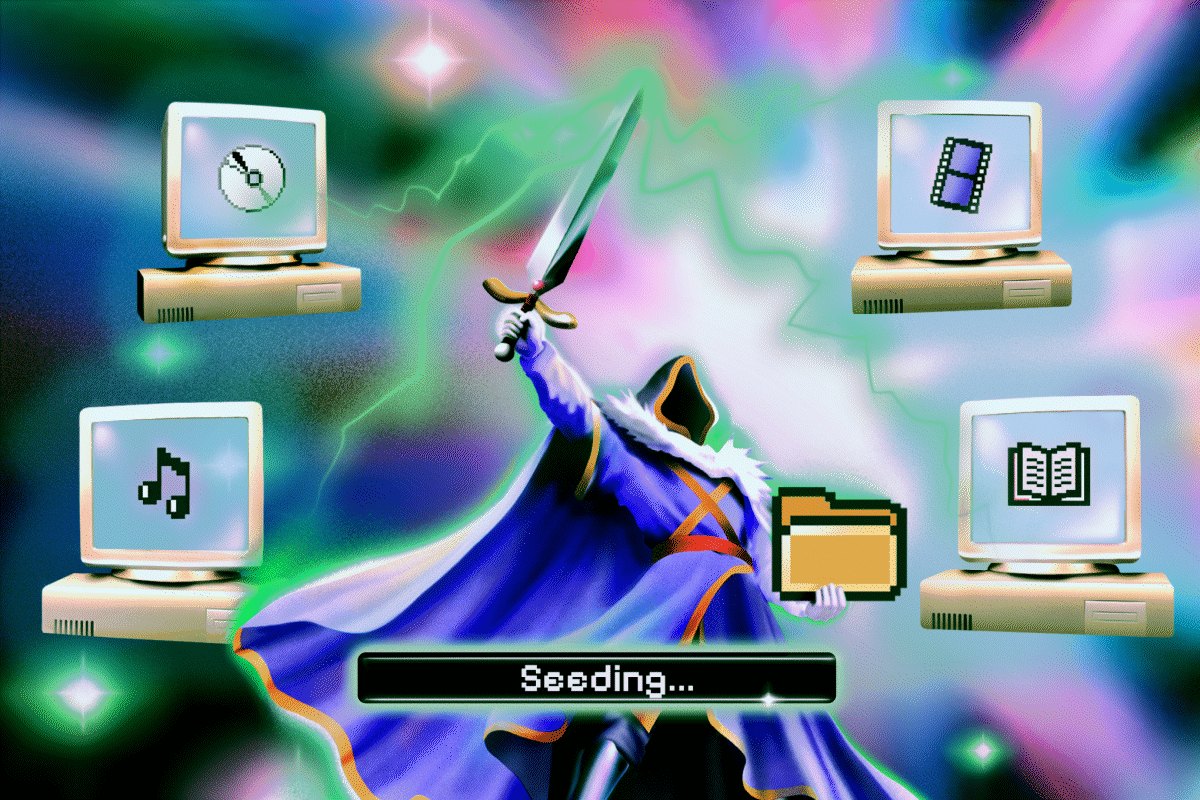
Administrators open registration windows only every few weeks or months, or rely entirely on personal invites. Applicants often undergo formal vetting, such as joining an Internet Relay Chat room to face real-time quizzing on community rules and technical standards. The defunct music tracker What.CD previously required candidates to pass comprehensive tests on MP3 encoder settings, publishing an official study guide.
Administrators open registration windows only every few weeks or months, or rely entirely on personal invites. Applicants often undergo formal vetting, such as joining an Internet Relay Chat room to face real-time quizzing on community rules and technical standards. The defunct music tracker What.CD previously required candidates to pass comprehensive tests on MP3 encoder settings, publishing an official study guide.
Once admitted, members operate within a strict ratio economy where total downloaded data must be balanced by an equivalent volume of uploaded data. To prevent users from downloading files and immediately leaving, server operators enforce automated penalties, reducing download privileges or issuing instantaneous bans to accounts that fall below mandated thresholds.
Networks designate select files as freeleech, which do not count against ratio limits. To survive, participants like Jane, who maintains 14 active tracker accounts and seeds over 2,000 torrents, deploy automated scripts that monitor IRC channels to grab new uploads instantly.
Advertisement
Tech Pulse Daily
Get tomorrow's pulse first
Join engineers who read Tech Pulse before stand-up. Free, weekday mornings.
03Why it matters
When proprietary platforms pull titles, rare independent cinema, vintage television broadcasts, and educational coursework face total extinction unless retained by third parties. Private tracker members address this fragility by distributing redundant copies of niche media across personal hard drives. Even though participants acknowledge ethical conflicts and guilt regarding copyright infringement, they justify their involvement through an archivist imperative.
When proprietary platforms pull titles, rare independent cinema, vintage television broadcasts, and educational coursework face total extinction unless retained by third parties. Private tracker members address this fragility by distributing redundant copies of niche media across personal hard drives. Even though participants acknowledge ethical conflicts and guilt regarding copyright infringement, they justify their involvement through an archivist imperative.
The operational dynamics of private trackers also foster an intense social prestige economy driven by artificial scarcity and hierarchy climbing. Members invest substantial computational resources and personal time to unlock access to elite trackers, using reputation on introductory servers as currency to earn invitations elsewhere.
As Pakistan-based user Maysay explains, the desire to penetrate exclusive communities becomes a primary motivator, driving users to maintain thousands of active torrents. This status hierarchy compels participants to download and seed massive files solely to meet arbitrary seeding metrics required for account promotions.
04Who is affected
The private tracker ecosystem impacts a diverse spectrum of internet users, separating dedicated cultural preservers from casual media consumers. For participants like Odel, a West Coast college student who initially sought reliable downloads for video games, private trackers replaced all conventional media outlets.
Odel has accumulated active memberships across roughly 30 private communities, downloading approximately 500 terabytes of data while consuming less than one percent of that material. This massive gap between acquisition and actual consumption is standard among veteran peers who treat storage arrays as compliance engines.
The strict enforcement of community standards also exposes participants to collective penalties that cross server boundaries. Tracker administrative staffs communicate directly across disparate platforms, monitoring member integrity and enforcing zero-tolerance policies against illicit invite trading.
Selling invitations is classified as a critical operational security breach; violating this rule results in immediate expulsion and coordinated blacklisting across affiliated networks. Consequently, ordinary members bear personal liability for the conduct of individuals they sponsor into the ecosystem, forcing participants to police peers aggressively to insulate the community from external intervention.
05What to watch
The long-term viability of private trackers faces growing strain from increasing technical complexity and the physical overhead of personal storage arrays. As participants manage dozens of accounts across fragmented sites, relying on automated scripts, virtual private servers, and continuous seeding routines introduces significant operational maintenance burdens.
The demographic profile of tracker communities remains narrow, restricted to individuals possessing the technical proficiency required to configure BitTorrent clients, pass IRC technical quizzes, and budget for multi-terabyte storage hardware. If younger media consumers favor corporate streaming, the pool of volunteer archivists may decline.
When an elite tracker ceases operations, decades of meticulously organized discographies and metadata vanish overnight unless mirrored across backup networks. Tracker administrators must continuously balance operational security against the necessity of recruiting disciplined new contributors. As copyright enforcement mechanisms evolve, private networks will be forced to adapt their server architectures and vetting protocols.
When an elite tracker ceases operations, decades of meticulously organized discographies and metadata vanish overnight unless mirrored across backup networks. Tracker administrators must continuously balance operational security against the necessity of recruiting disciplined new contributors. As copyright enforcement mechanisms evolve, private networks will be forced to adapt their server architectures and vetting protocols.
Torrent underground FAQ
What are private torrent trackers and how do they differ from public piracy sites?
Private torrent trackers are invite-only file-sharing communities that rely on strict rules, secrecy, and vetting procedures to share media over BitTorrent. Unlike public piracy websites, they require members to maintain specific upload-to-download ratios and curate meticulously organized catalogs spanning niche media.
How do prospective members gain access to private torrent communities?
Users must either receive an invitation from an existing member in good standing or apply during infrequent open registration windows. Many private trackers require applicants to pass real-time interviews in IRC chatrooms covering server rules and audio technicalities, or provide proof of active accounts on other trackers.
Why do users download terabytes of media they do not plan to watch?
Tracker ranking systems and ratio requirements force users to seed substantial amounts of data to maintain download privileges and earn access to more exclusive communities. Members like Odel and Jane frequently download and seed thousands of torrents solely to accumulate upload credit within the tracker economy.
What penalties do private tracker members face for violating platform rules?
Failing to maintain required upload-to-download ratios leads to curtailed download privileges or immediate account bans. Serious security violations like selling invites trigger coordinated blacklists, where staff from multiple trackers communicate to ban the offender across several platforms simultaneously.
Sources

Author
Dillip Chowdary
Writes Tech Bytes coverage of AI, engineering, and the tools that actually ship. Editor of Tech Pulse Daily.
Related on Tech Bytes
Advertisement