UN court cites military Facebook posts while finding Myanmar guilty
The UN International Court of Justice cited military Facebook posts in its ruling finding Myanmar guilty of state-sponsored genocide against Rohingya Muslims.
By Dillip Chowdary • Nov 20, 2026 • Source: The Verge
At a glance
- Judicial body
- International Court of Justice
- Target population
- Rohingya Muslim minority
- Platform involved
- Incident timeframe
- 2016 and 2017
- Lawsuit filed
- 2019 by The Gambia
- Pre-massacre post
- August 25, 2017
The International Court of Justice determined that Myanmar committed state-sponsored genocide against the Rohingya people during military operations in 2016 and 2017. In its ruling, the United Nations top court found that Facebook helped Myanmar's military spread hate speech against its Muslim minority. According to The Verge's report, the judicial decision formally links social media messaging to state-backed genocidal campaigns.
This report details the court findings, evidentiary filings from international investigative bodies, and corporate governance actions regarding military online activity. It is written for policy analysts, technology compliance officers, and legal researchers tracking platform liabilities in international law. Readers will find documented facts on military clearance operations, algorithmic amplification findings, and subsequent corporate policy changes.
01International Court of Justice genocide ruling
The United Nations top judicial court ruled that Myanmar executed state-sponsored genocide against the Rohingya Muslim minority during 2016 and 2017 operations. The tribunal determined that Facebook posts published by the nation's military dehumanized the Muslim minority group. Judges noted that these official posts encouraged and legitimized direct violence against civilians.
The ruling establishes that military authorities used popular network infrastructure to facilitate violent state operations against minority communities. By determining that military communications normalized atrocities, the court connected online distribution systems directly to physical genocide. The finding sets an important precedent for assessing digital propaganda within international criminal law.
International judges reached their conclusion after reviewing extensive communications records and investigative testimonies from the conflict region. The court established that state-controlled digital communications formed an operational component of the broader genocidal campaign. Consequently, international legal bodies now treat systemic online dehumanization as material evidence of state-sponsored atrocities.
02The Gambia lawsuit and clearance operations
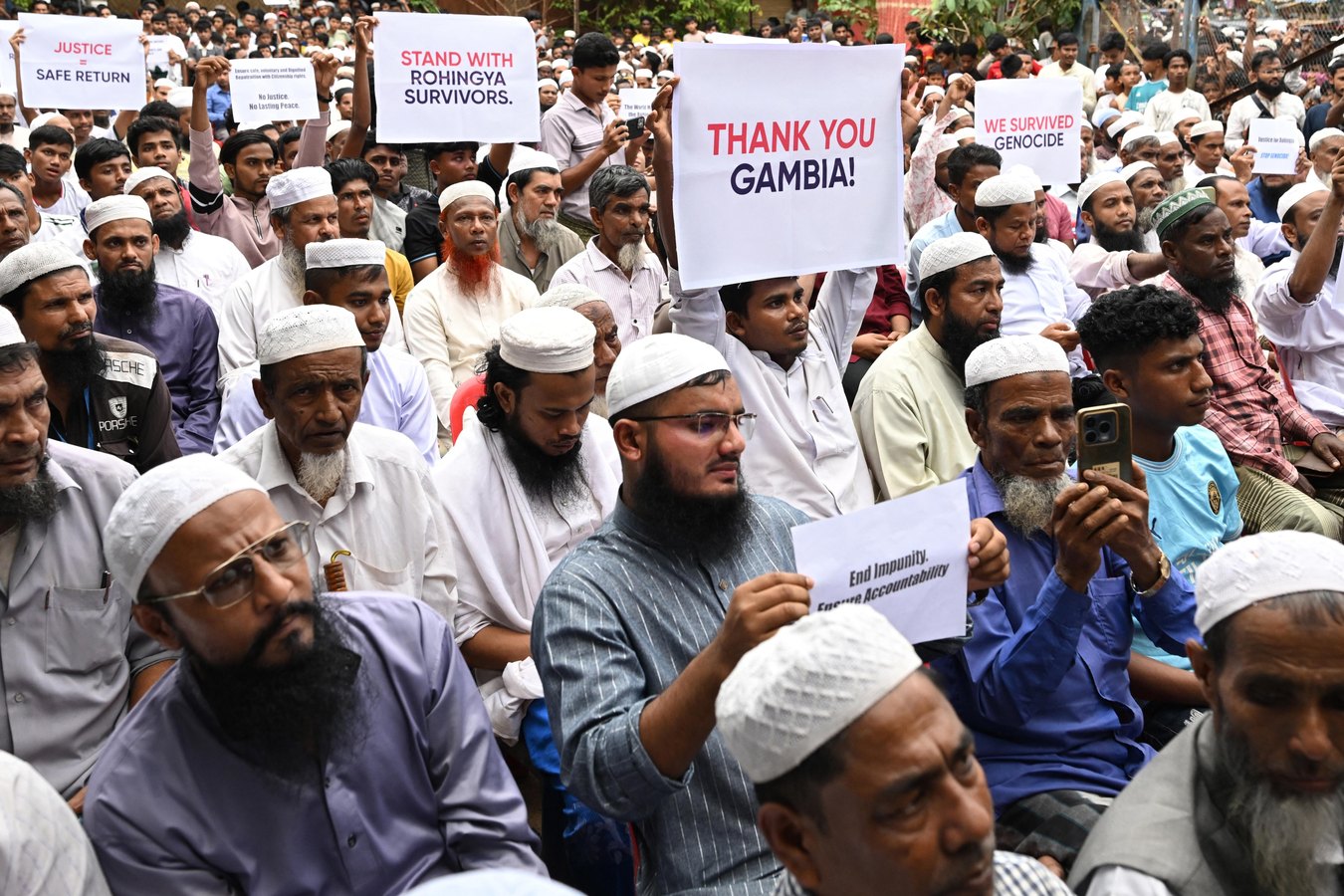
The formal genocide case began in 2019 when the Republic of The Gambia sued Myanmar at the International Court of Justice. The lawsuit targeted the military's violent clearance operations against Rohingya Muslims throughout Rakhine State. The legal action demanded formal accountability for civilian massacres, widespread village destruction, and forced mass displacement.
During the clearance operations, armed forces carried out systematic ground assaults that drove hundreds of thousands of civilians into neighboring countries. The Gambia submitted documentation showing how military leaders combined physical violence with targeted messaging campaigns to justify operations. The judicial process established direct links between military field maneuvers and state communications.
Rohingya refugees living in Bangladesh displacement camps followed the tribunal proceedings as international judges evaluated the case evidence. The resulting ruling confirmed that the military operations constituted intentional, state-sponsored genocide under international conventions. The decision validated The Gambia's claims, establishing formal sovereign liability for the physical and digital campaign.
03Platform dominance and algorithmic amplification findings
Advertisement
Tech Pulse Daily
Get tomorrow's pulse first
Join engineers who read Tech Pulse before stand-up. Free, weekday mornings.
Myanmar's military relied heavily on Facebook because it served as the dominant information network in the country during the attacks. A 2022 Amnesty International report revealed that the platform proactively amplified and promoted content that incited violence, hatred, and discrimination against the Rohingya. That dynamic provided military actors with unmatched domestic reach.
Human rights activists issued multiple warnings to company officials regarding the rapid spread of dangerous anti-Rohingya material. Amnesty International found that despite these repeated notifications, the platform failed to stop the circulation of hateful content. The lack of effective moderation enabled hostile military messaging to spread without meaningful technical barriers.
The research demonstrated how engagement algorithms favored sensational, hostile publications over standard communications during regional crises. Corporate systems failed to curb discriminatory rhetoric, enabling state actors to manipulate recommendation engines during key phases of the offensive. The resulting distribution patterns accelerated civilian radicalization ahead of coordinated military maneuvers.
04Military posts and public vitriol evidence
The United Nations supported its judgment by citing findings from the Independent Investigative Mechanism for Myanmar. The investigative body highlighted a military post published immediately before the August 25th, 2017 massacres against the Rohingya people. Investigators reported that this specific post unleashed an immediate torrent of public vitriol across domestic feeds.
The military post generated more than 200 public comments calling for extreme physical violence against the Muslim minority. Users explicitly demanded that Rohingya people be shot, killed, exterminated, or permanently removed from Myanmar. The documented response proved that official digital communications directly mobilized extreme hostility ahead of fatal field operations.
The Independent Investigative Mechanism for Myanmar collected thousands of hostile military communications distributed during the operational window. Analysts demonstrated that these communications served as deliberate psychological preparation for subsequent ground assaults on minority settlements. The preserved records provided prosecutors with concrete evidence of organized, state-directed incitement.
05Corporate admissions and human rights policy
Facebook later removed military-linked pages containing thousands of anti-Rohingya hate speech posts published between July and December 2017. The company admitted in 2018 that it did not do enough to prevent the incitement of violence in Myanmar. That admission followed extensive international criticism regarding the platform's role during the humanitarian catastrophe.
Following the crisis, the company introduced a corporate human rights policy to evaluate global operations and moderation practices. The framework includes an annual report that tracks the platform's impact on human rights across international markets. These internal governance reforms were created to identify and mitigate severe risks in conflict zones worldwide.
Note: The Verge reached out to Meta with a request for comment regarding the ruling, but the company did not immediately respond. The silence leaves outstanding questions about how current enforcement standards compare to the corporate commitments made following the 2018 admissions.
Frequently asked questions
What did the International Court of Justice determine about Facebook's role in Myanmar?
The court found that Facebook posts published by Myanmar's military dehumanized the Rohingya Muslim minority and helped encourage and legitimize violence against them.
What evidence showed military incitement on Facebook ahead of the massacres?
The United Nations cited an IIMM report detailing an August 25, 2017 military post that drew over 200 comments calling for Rohingya people to be shot, killed, exterminated, or permanently removed.
What did Amnesty International report regarding Facebook's platform in Myanmar?
A 2022 Amnesty International report found that Facebook proactively amplified content inciting violence and discrimination against the Rohingya, failing to stop hateful rhetoric despite warnings from activists.
What corporate actions did Facebook take following the Myanmar crisis?
Facebook admitted in 2018 that it failed to prevent violence incitement, removed military-linked pages containing thousands of posts from late 2017, and established a corporate human rights policy with annual reporting.
Sources

Author
Dillip Chowdary
Writes Tech Bytes coverage of AI, engineering, and the tools that actually ship. Editor of Tech Pulse Daily.
Related on Tech Bytes
Advertisement